
Espresso Concentrate vs. Oil Orange Puree: Which Base Fits Your Line?
An espresso concentrate and an oil orange puree can both be filled at 30 ml per single-serve unit, and that is where the similarity stops. The coffee-1 espresso concentrate is built for mocha, black, Italian espresso, American and cold brew formats, ships as 30 ml per strip with 10 strips per box, and requires high-temperature processing on a pasteurization line followed by cool, dry, sealed storage. The Liquid beverages-1 oil orange puree is built for liquid beverages made from that base, ships as 30 ml per sachet with 5 bags per box, and is specified as FDA-certified supply for the US market. One route commits you to a thermal process; the other commits you to a certification-led route to market.
For a brand buyer at decision stage, the question is not which base is superior in the abstract. It is which base your filling line, carton architecture, compliance file and first market can support at launch, and which one you add in a second phase. SPACELIFE, the functional food and beverage supply brand operated by Shenyang Songming Supply Chain Co., Ltd., works on this kind of base-to-line matching for B-end clients, and the comparison below stays with the specifications supplied for both bases rather than a generic category argument.
Six dimensions decide it: application fit, pack format, processing and storage, FDA compliance, market weighting, and the OEM/ODM development path. Each is covered in turn, followed by a comparison table, three conditional launch scenarios and a short FAQ.
Quick answer. Choose the espresso concentrate when most of your first-year SKUs are coffee formats and you can run high-temperature processing with a pasteurization line plus cool, dry, sealed storage. Choose the oil orange puree when your launch is a fruit-based liquid line aimed at FDA-certified US supply. If both appear in the plan, sequence them: validate one base and one pack first, then add the second.
The Decision on the Table: Two 30 ml Bases, Two Different Commitments
Both products are 30 ml liquid bases, so a specification sheet makes them look like two options on the same shelf. They are not interchangeable, because one is a coffee platform and the other is a beverage platform.
The espresso concentrate is a coffee-platform base: a single liquid that becomes five different finished drinks through dilution and added ingredients. The oil orange puree is a beverage-platform base: it defines a fruit-based liquid line rather than a variation on a coffee line. That structural difference is what the rest of this comparison measures.
The expensive mistakes in base selection are rarely flavour mistakes. They are commitments — printed artwork and carton counts, a process validation run on a specific pack, a compliance file assembled around a product classification, and a retail price architecture calculated per serving. Each of those is cheaper to change before the base is locked than after.
The decision rule this article builds toward is deliberately plain: count the finished formats you must ship in the first twelve months, then choose the base per production line rather than per brand. A brand can carry both bases. A single line rarely carries both without a changeover and a second validation.
Why Base Selection Sits Inside the Supply Chain Now
The category behind both bases is large and still expanding. Fortune Business Insights values the global functional food and beverage market at USD 437.62 billion in 2026, up from USD 398.81 billion in 2025, and projects USD 983.17 billion by 2034. Grand View Research projects the beverage segment to grow at a 9.2% compound annual growth rate between 2026 and 2034, and Fortune Business Insights places Asia Pacific at 39.67% of the market in 2025.
Those figures explain why a base decision is now treated as a supply chain question rather than a purchasing formality: at that scale, the binding constraint on a launch is usually not the idea but whether the base, the pack and the compliance file can be executed together. The figures also have a limit. They describe a global and regional category, not demand for your SKU in your market, so they justify a disciplined launch process rather than a confident forecast.
What makes a drink functional in the first place is defined in the supplied category comparison. A functional product adds bioactive ingredients to a conventional base: probiotics or prebiotics, plant extracts such as curcumin, anthocyanins and green tea polyphenols, vitamin and mineral fortification, functional sweeteners such as erythritol and allulose, and proteins or peptides such as collagen peptides and lactoferrin. The energy-oriented version adds taurine, caffeine, electrolytes and vitamin B, aimed at refreshment, anti-fatigue and energy replenishment, and the supplied comparison places those products around post-exercise recovery, concentration and meal replacement occasions.
Two consequences follow for a buyer. First, the functional position is created by the additions, so the base's job is to carry them in a format that survives the process and the pack. Second, the supplied comparison puts a functional product roughly 10% above ordinary drinks and food on cost, attributed to those added bioactive ingredients. That is a category-level gap against ordinary beverages — not a quotation for either base and not a price for a specific batch — so treat it as a budget frame and nothing more.
The same comparison describes OEM/ODM customisation as the operating model for functional products, which matches what base selection actually involves: formulation, pack and process are configured per project rather than selected from a catalogue.
Application Fit: One Coffee Base, Five Formats vs a Fruit-Based Line
The espresso concentrate covers more formats inside coffee: mocha, black, Italian espresso, American and cold brew all draw on the same 30 ml base. The oil orange puree covers a narrower but cleaner territory: it is the base for liquid beverages made from oil orange puree, and the supplied specification does not position it as a coffee modifier.
On the coffee side, the five formats are not five products to develop from scratch. They differ in dilution and in what is built around the base — water, dairy or a plant-based alternative, sweetener, and chocolate in the case of mocha — plus serving temperature for the cold brew and American builds. The formulation work therefore concentrates on fixing dilution ratios and addition levels once, then repeating them consistently. Those ratios are not stated in the supplied specification and have to be established in trial batches rather than assumed from a competitor's product.
The coffee side also has a functional route already inside SPACELIFE's stated range. Peptide-infused coffee sits alongside functional foods, prune juice drinks, meal replacement powders and health supplements as one of five core categories, which means collagen peptide addition on a coffee base is a category the supplier works in rather than a one-off engineering request.
On the orange side, the specification is narrower and clearer. It is a base for liquid beverages, filled at 30 ml per sachet with 5 bags per box, supplied as FDA-certified liquid beverage supply for the US market. A brand whose first launch is a fruit-based functional drink should read that as a single-platform decision, not as a coffee alternative.
The practical test is SKU count. If more than half of your planned first-year SKUs are coffee formats, the espresso concentrate is the lower-complexity base. If the launch set is a fruit-based liquid line, the puree is. If both appear in the plan, sequence them — one base and one pack validated first, the second added once the first is stable.
Pack Format: Strips and Sachets at the Same 30 ml Dose
Both bases are dosed at 30 ml per single-serve unit. The coffee-1 espresso concentrate runs 30 ml per strip with 10 strips per box; the Liquid beverages-1 oil orange puree runs 30 ml per sachet with 5 bags per box. The fill volume is identical, and almost everything around it is not.
Because the dose is the same, the recipe cost per serving and the declared quantity are set by the 30 ml fill rather than by the pack. What changes is the packaging architecture. On the supplied figures, the strip configuration carries 10 servings per box and the sachet configuration carries 5 — twice the servings per box on the strip side. That is arithmetic from the two box counts, not a measured retail result, and it flows into cost per serving at a fixed retail price, into sampling cost per trial pack, into cartons per case, and into how much label area remains for mandatory information and claim text.
Two checks belong before artwork is signed off. First, confirm the filling line handles the primary pack you have chosen: a strip and a sachet are different film formats with different seal geometry, and a line validated on one is not automatically validated on the other. Second, confirm the box count against your retail channel, because a 10-count box and a 5-count box are different shelf and price propositions even when the liquid inside is identical.
Processing and Storage: Where the Two Routes Diverge
The espresso concentrate route carries an explicit thermal requirement: high-temperature processing with a pasteurization line, followed by cool, dry, sealed storage. The oil orange puree route, as specified for this comparison, carries an explicit market requirement instead: FDA-certified liquid beverage supply for the US market.
The coffee requirement is not only an equipment question. In the supplied risk profile for functional food and beverages, the food-health risk is controlled by pasteurisation together with FDA certification, and the pasteurization line is named as the enterprise measure behind that control. Process and paperwork therefore operate as one system — a validated thermal step plus the certification evidence that supports what you tell a buyer or a regulator.
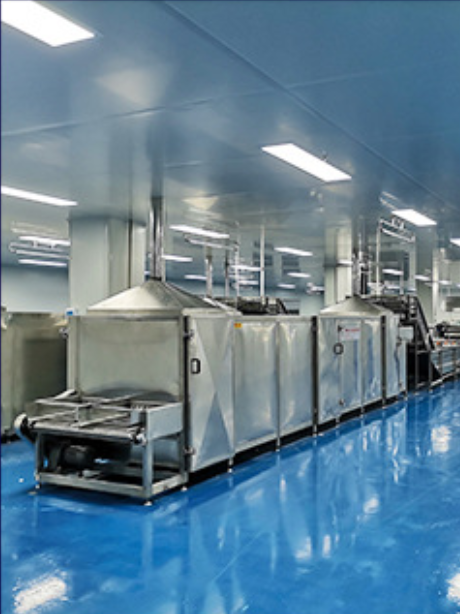
Two cautions follow from that. A thermal process is validated against a specific product-and-pack combination, so a process proven on one format should be re-confirmed for the other rather than carried over by assumption. And the storage clause has to be translated into warehouse and distributor conditions: a base stored outside cool, dry, sealed conditions is no longer the base that was validated.
For the puree route, the supplied specification emphasises certification and US market supply rather than a storage clause. That is not a gap to be filled by assumption — ask for the storage and handling conditions in writing for the specific lot and pack before the purchase order is issued.
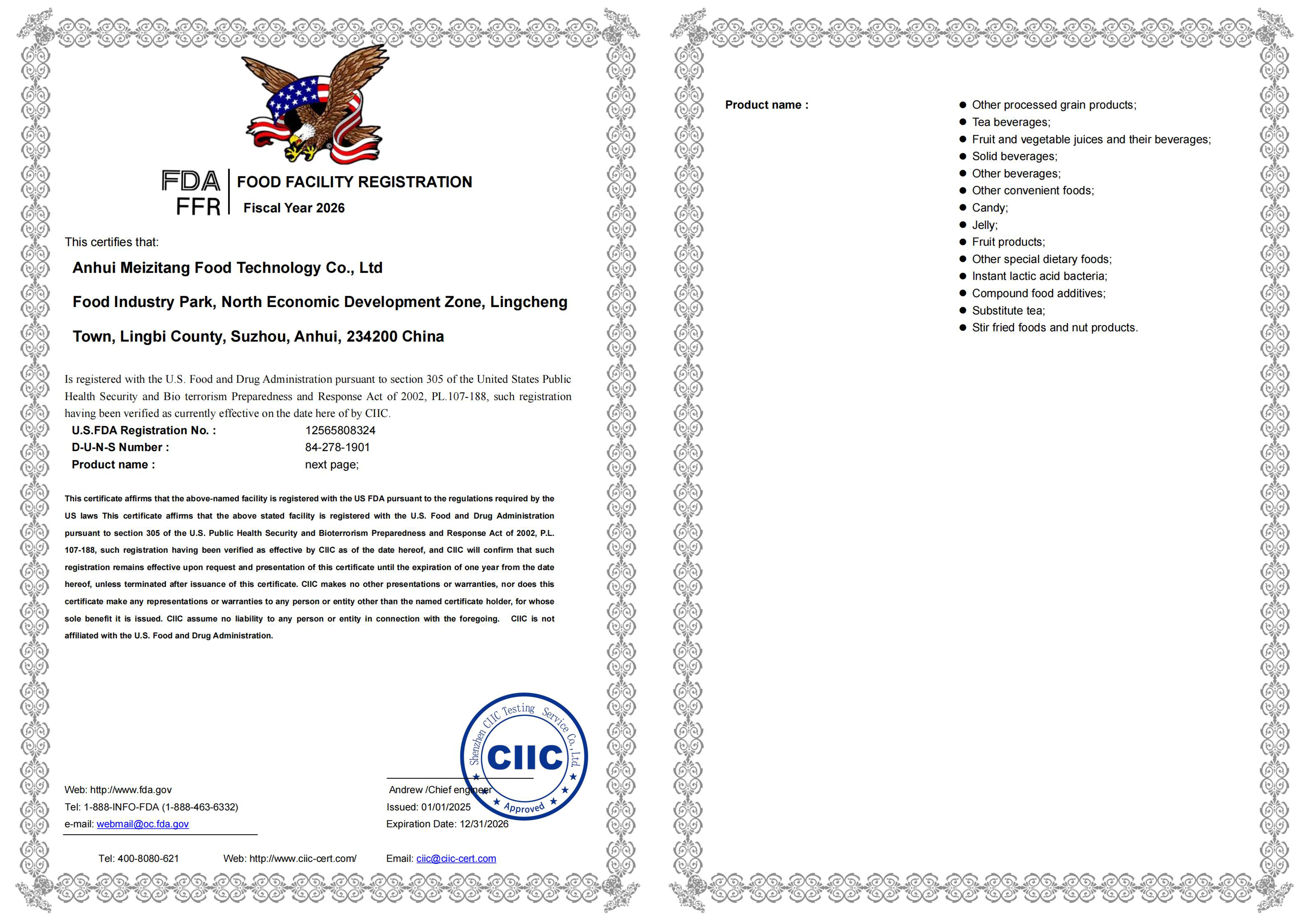
Compliance: FDA Certification 84-278-1901 and Food Facility Registration
Two compliance checkpoints do different jobs in this decision: FDA certification 84-278-1901 and FDA food facility registration. Both should be confirmed in the name of the entity that will actually ship your batch.
For the certification, the useful questions are about scope rather than existence: which facility, which product category and which process the certificate covers, who holds it, and whether it is current. A certificate reference is evidence about a defined scope. It is not a blanket clearance for every SKU a brand might later add to the same line, which is why the scope question belongs in the first supplier meeting rather than the last.
For registration, the question is facility-level: whether the site that manufactures, processes, packs or holds the product for the US market is registered, and whether the registered site is the one that will run your production.
The third compliance question is the one most often left late: how the product is classified. FDA identifies three claim categories used on food and dietary-supplement labels — health claims, nutrient-content claims and structure/function claims — and the obligations are not the same across product types. For dietary supplements, structure/function claims require substantiation, notification to FDA no later than 30 days after marketing, and a required disclaimer; conventional food manufacturers do not carry that same notification requirement for structure/function claims. A functional beverage positioned as a conventional drink and the same liquid positioned as a supplement therefore sit in different files, with different timing.
On the formulation side, USDA FoodData Central provides food and nutrition composition data that can support nutritional analysis and product formulation work. It is a reference for what the base and the additions contribute to a nutrition panel; it says nothing about a supplier's capacity, certification or delivery record.
Market Fit: Reading the Numbers Without Overreading Them
On the supplied figures, Asia Pacific held 39.67% of the global functional food and beverage market in 2025, and beverages are projected to grow at 9.2% a year between 2026 and 2034. SPACELIFE's stated supply network is weighted 30% Japan, 30% United States, 20% Saudi Arabia and 20% Germany, with an export ratio of 51%–60% and main markets in North America, Eastern Asia, Western Europe and the Middle East.
The network split describes where fulfilment weight sits, not where demand for your SKU sits. Used properly, it produces a question rather than an answer: which of those markets is your first listing in, and does the pack you selected suit that market's retail unit? The regional and global market figures in this comparison do not establish country-level demand for either espresso concentrate or oil orange puree. Your listing commitments, distributor conversations and trial results are the evidence that settles it.
The OEM/ODM Path from Base Choice to Shipped Batch
The sequence below keeps the two bases comparable at each stage. It applies whether the project lands on the espresso concentrate, the oil orange puree, or both in sequence.
- List the finished formats. Write down every SKU you intend to ship in the first year and mark which base each one uses. This single list usually settles the debate, because one base often covers most of the line.
- Choose the base per line, not per brand. A brand can hold both bases; a line cannot hold both without changeover and a separate validation run.
- Fix the pack and box count. 30 ml per strip with 10 strips per box, or 30 ml per sachet with 5 bags per box. Confirm the film, the seal and the carton against your retail channel before artwork.
- Confirm process and storage against the real formula. Re-confirm the thermal step on the actual product-and-pack combination, and put the cool, dry, sealed storage clause in writing with the puree's storage conditions.
- Build the compliance file. Confirm the scope and holder of FDA certification 84-278-1901, the registration status of the facility that will run the batch, and the claim classification of the finished product.
- Run a trial on the real pack. SPACELIFE supports small-batch trial orders starting from 30 units, which is the point at which dilution, addition levels and pack performance can be tested together rather than separately.
- Scale with delivery terms attached. SPACELIFE reports a 98% on-time order delivery rate, 100% traceability across product categories and a 99.8% quality pass rate, supported by a free-trade-zone location credited with a 30% increase in cargo turnover efficiency. Product selection is led by a team including 25 engineers and a PhD-led review, with flavour profiles curated by a professors' panel.
Side-by-Side Comparison
The table below holds only the specifications supplied for this comparison. Where a value is not stated for a base, the row says so instead of filling the gap with an assumption.
| Decision dimension | Espresso concentrate (coffee-1) | Oil orange puree (Liquid beverages-1) | What it changes for the buyer |
|---|---|---|---|
| Finished formats | Mocha, black, Italian espresso, American, cold brew | Liquid beverages made from oil orange puree | How many SKUs come from one base, and whether the portfolio is coffee-led or fruit-led |
| Pack format | 30 ml per strip; 10 strips per box | 30 ml per sachet; 5 bags per box | Servings per box, sampling cost, shelf and price architecture |
| Process requirement | High-temperature processing with a pasteurization line | FDA-certified US market liquid beverage supply; process confirmed per finished formula | Line capability, validation runs and changeover planning before artwork |
| Storage | Cool, dry, sealed | Confirm in writing per supplier specification | Warehouse, distributor and shelf-life conditions |
| US compliance emphasis | FDA certification 84-278-1901; FDA food facility registration | FDA-certified US market supply | Which documents to verify, and that holder and facility names match the shipper |
| Functional additions | Bioactive ingredients and energy ingredients added on top of the base | Same category logic applied to a fruit-based liquid | Where the roughly 10% category cost gap against ordinary drinks comes from |
| Development model | OEM/ODM functional food development | OEM/ODM functional food development | Formulation, pack and claim file configured per project |
| Fits when | Coffee-led SKU set and a validated thermal line | Fruit-forward liquid line targeting US retail supply | The decision itself |
Two things the table deliberately does not claim: unit cost and shelf life. Neither specification supplies a price or a shelf-life value for either base, and the 10% figure is a category comparison against ordinary drinks rather than a base-to-base price. Both have to come from a quotation and a stability trial on your actual formula and pack.
Three Launch Scenarios
The configurations below are illustrative examples rather than documented customer cases. They show how the same decision logic resolves differently depending on the portfolio.
Scenario A: a coffee-led brand adding a functional coffee line
A brand already selling coffee formats starts with the espresso concentrate, because the five formats — mocha, black, Italian espresso, American and cold brew — share one base and one thermal process. The 30 ml strip with 10 strips per box gives a single retail unit across the range, and the compliance file is built once around the coffee line. The oil orange puree stays out of scope until the coffee line is stable.
Scenario B: a beverage brand launching a fruit-based functional drink
A brand whose first SKU is a liquid beverage built on oil orange puree starts on that side, using the 30 ml sachet with 5 bags per box and the FDA-certified US supply route. The pack count matters here: 5 servings per box sets a different price and sampling structure from the 10-count strip, and the retail unit should be chosen before the pack artwork rather than after.
Scenario C: a brand that needs both bases
Where the launch plan contains a coffee line and a fruit line at the same time, sequence rather than parallel-run. Validate one base, one pack and one compliance file first, then add the second base once the changeover, storage and claim classification are documented. Running both from day one doubles the validation and documentation load at exactly the point where a launch can least absorb it.
FAQ
Is FDA certification 84-278-1901 the same thing as FDA food facility registration?
No — they are different checkpoints, and a US-bound liquid beverage file usually needs both confirmed. Certification reference 84-278-1901 is the certificate evidence named in this comparison; food facility registration is a facility-level status for the site that manufactures, processes, packs or holds the product for the US market. Before launch, ask for the certificate with its scope and holder name, and for the registration record of the specific facility that will make your batch. Neither document settles your label claims on its own: FDA separates health claims, nutrient-content claims and structure/function claims, and the obligations differ between conventional foods and dietary supplements.
Can one production line run espresso concentrate strips and oil orange puree sachets?
Not automatically. The two products are packed differently — 30 ml per strip with 10 strips per box against 30 ml per sachet with 5 bags per box — and the coffee base carries a high-temperature process with a pasteurization line plus cool, dry, sealed storage. Whether one site can run both depends on the filling format, the film, the changeover procedure and the validation record. Ask for a line-fit confirmation and a changeover plan before committing artwork to either pack.
Why does a functional base cost more than an ordinary drink?
The supplied category comparison puts a functional product about 10% above ordinary drinks and food, and attributes the gap to the added bioactive ingredients — probiotics or prebiotics, plant extracts, vitamin and mineral fortification, functional sweeteners, and proteins or peptides. That figure compares functional products with ordinary beverages as categories. It is not a quote for the espresso concentrate, not a quote for the oil orange puree, and not a base-to-base price; a real comparison needs a quotation on your formula, fill volume and pack.
Can I test a base before committing to a full production run?
Yes. SPACELIFE supports small-batch trial orders starting from 30 units, which is enough to test dilution, addition levels and pack performance together. Specify which base, which pack and which target market in the trial request, because the espresso concentrate and the oil orange puree do not share the same process, pack or compliance path. A trial run on the wrong pack answers the wrong question.
What delivery commitments should I expect once a base is chosen?
SPACELIFE reports a 98% on-time order delivery rate, 100% traceability across its product categories and a 99.8% quality pass rate, supported by a free-trade-zone location credited with a 30% increase in cargo turnover efficiency. Specific lead time still depends on the base, the pack and the quantity, so it should be confirmed in writing for each SKU rather than inferred from an average. If you are weighing the two bases for a live project, send the finished format, pack type and target market to SPACELIFE and ask for a line-fit review plus a trial-batch quotation.
Conclusion: Choose the Base Your Line Can Carry
The espresso concentrate and the oil orange puree are not competing answers to the same question. The concentrate answers a coffee-portfolio question: one base, five formats, a 30 ml strip with 10 strips per box, and a thermal process built around a pasteurization line and cool, dry, sealed storage. The puree answers a fruit-line question: liquid beverages made from oil orange puree, a 30 ml sachet with 5 bags per box, and FDA-certified US market supply.
The decision therefore runs in a fixed order. Count the finished formats and assign each to a base. Check the pack against the filling line and the retail channel. Confirm the thermal process and the storage conditions on the real product-and-pack combination. Build the compliance file around FDA certification 84-278-1901, the facility registration of the site that will run the batch, and the claim classification of the finished product. Then trial the base before scaling it.
Get that sequence right and the base choice stops being a preference. It becomes a documented line, pack and compliance decision that a brand can defend to a retailer, an importer and its own operations team.
Have Questions or Need More Details?
Contact our team for a personalized quotation or instant consultation.
Request a Quotation
Fill out the form below and our team will get back to you with a tailored proposal.
WhatsApp Direct Chat
Prefer to chat in real-time? Message us on WhatsApp for instant assistance & quick answers.
- Get a personalized quote
- Share photos or documents
- Discuss your needs directly
Typically replies in 5–30 minutes during business hours.