
Coffee Concentrate & Liquid Beverage Selection Parameters
Coffee Concentrate & Liquid Beverage Selection Parameters
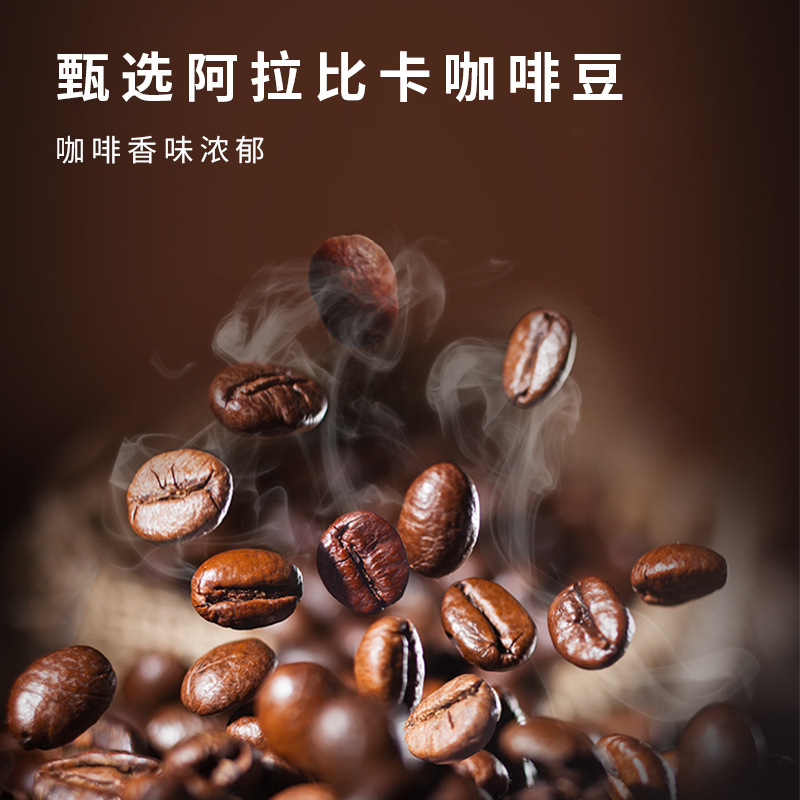
Functional coffee concentrate and liquid beverage inputs are selected on six parameter families: declared composition, packaging and fill, application fit, processing and storage conditions, compliance scope, and commercial terms. Leave any of the six open and the quotations you receive cannot be compared, because two suppliers can price the same “30 ml espresso concentrate” against different raw materials, different fill formats and different processing assumptions.
This guide uses two documented reference models — coffee-1, an espresso concentrate, and Liquid beverages-1, an oil orange puree — to show how each parameter should be written into a brief, verified against the specification, and carried into a purchase order as an acceptance criterion. SPACELIFE is the functional food and beverage supply brand operated by Shenyang Songming Supply Chain Co., Ltd., a supply chain service provider for B-end clients in the functional food and healthy beverage sector, serving North America, Eastern Asia, Western Europe and the Middle East.
Problem Definition: Why Category-Level Briefs Fail in Functional Beverage Procurement
A brief that reads “espresso concentrate, 30 ml, for RTD coffee” is a category statement, not a specification. It describes a shelf, not a product, and it forces every supplier to fill the gaps with their own assumptions. Five gaps appear repeatedly.
- Composition left open. coffee-1 is formulated with select Arabica coffee beans, and its material list covers purified water, roasted coffee beans and coffee concentrate. A brief that names only “coffee concentrate” allows a quotation built on a different bean selection or a different material list, so the sample will not represent the quoted product.
- Packaging format treated as a detail. Strip and sachet both exist inside these two models: coffee-1 packs 30 ml per strip with 10 strips per box; Liquid beverages-1 packs 30 ml per sachet with 5 bags per box. That is 300 ml per box versus 150 ml per box, which changes carton count, label area, filling equipment and landed cost per serving.
- Registration confused with product approval. FDA food facility registration number 84-278-1901 is a facility registration issued under section 305 of the US Public Health Security and Bioterrorism Preparedness and Response Act of 2002, PL 107-188. It is a market-entry credential for the US and it does not settle how a claim may be worded on pack.
- Claim category decided late. FDA separates health claims, nutrient-content claims and structure/function claims. For dietary supplements, structure/function claims require substantiation, notification to FDA no later than 30 days after marketing and a required disclaimer; for conventional foods, FDA states no equivalent notification requirement for such claims. Product classification therefore belongs in the parameter set before artwork, not after.
- Processing and storage discovered after packing. coffee-1 is specified for high-temperature processing on a pasteurization line and for storage in a sealed container. Liquid beverages-1 is specified at room temperature with cool and dry storage. Found late, these conditions change packaging material, line scheduling and warehouse design — and sometimes the market itself.
Industry Background: Demand Growth Does Not Standardise Your Spec
The demand side explains why specification briefs are multiplying; it does not make them more precise. Fortune Business Insights sizes the global functional food and beverage market at USD 398.81 billion in 2025 and projects USD 437.62 billion in 2026, rising to USD 983.17 billion by 2034. The same research places Asia Pacific at a 39.67% share of that market in 2025. Grand View Research projects beverages as the fastest-growing product segment between 2026 and 2034, at a 9.2% CAGR.
Those numbers describe category growth, not procurement maturity. A beverage segment expanding at a 9.2% CAGR competes for the same filling capacity, the same packaging lead times and the same laboratory slots as every other brand in the queue. In that environment the brief with the clearer parameter set receives the accurate quotation first, because the supplier does not have to guess at composition, fill format or processing.
Regulation adds a second layer that is frequently misfiled as a purchasing detail. Official composition resources such as USDA FoodData Central support nutritional analysis and formulation work, and FAOSTAT provides official agriculture and food data covering more than 245 countries and territories from 1961 onward. Neither tells a buyer whether a specific claim can appear on a specific pack in a specific market. That determination sits with the applicable claim framework, which is why compliance scope belongs inside the parameter list rather than in a later review cycle.
Detailed Solution: The Six Parameter Families
The parameter set below is written so that each item can be copied directly into a request for quotation and later mirrored as an acceptance criterion. Each family is illustrated with facts from the two reference models.
1. Composition parameters
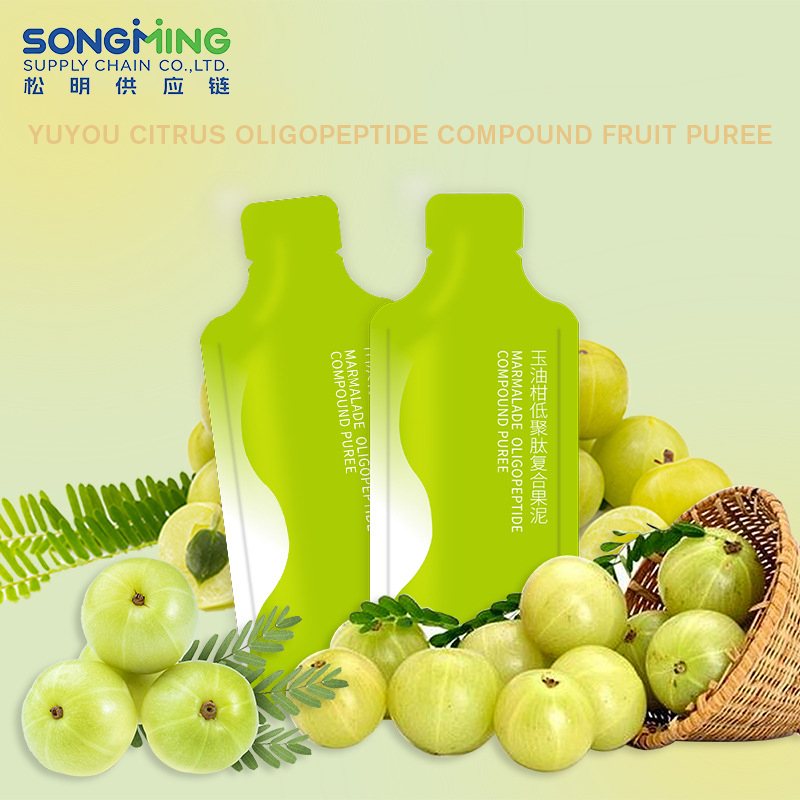
Record the material list, the characterizing raw material and any quantitative marker the specification actually states. coffee-1 declares select Arabica coffee beans as the bean input, with purified water, roasted coffee beans and coffee concentrate in the material list. Liquid beverages-1 is made from oil orange puree as the primary material, with a stated total original juice content of ≥80%.
Note the asymmetry honestly: the orange puree model carries a numeric marker (≥80% original juice), while the espresso concentrate specification carries a named bean selection but no numeric composition marker. Where no number exists, acceptance has to rest on the declared composition plus an approved sealed sample, and the buyer should say so in the brief instead of inventing a percentage the supplier never committed to.

2. Packaging and fill parameters
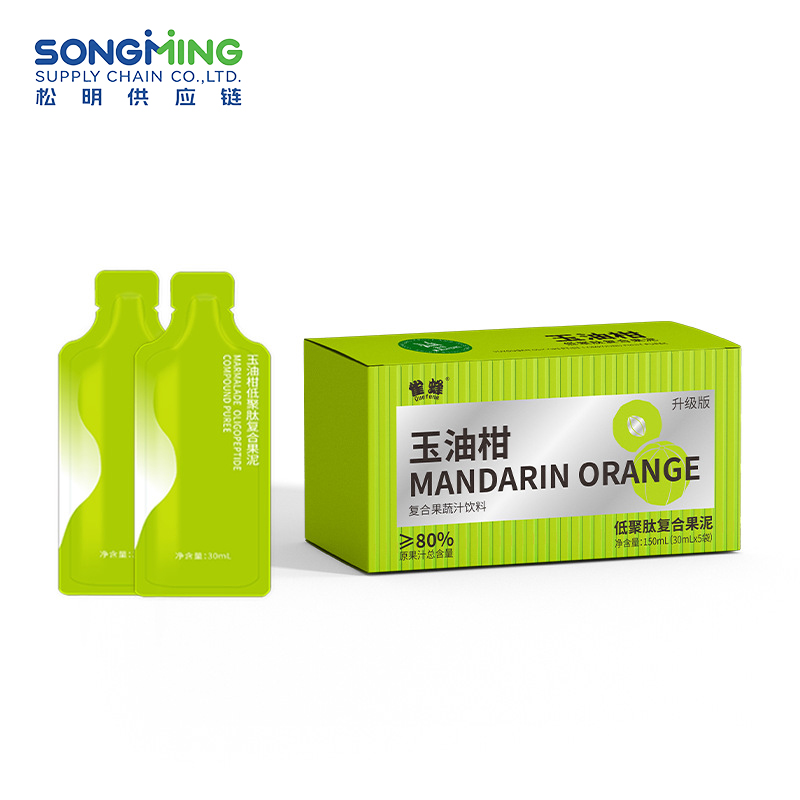
Write three values into every brief: unit fill, units per box, and net content per box. coffee-1 uses 30 ml per strip and 10 strips per box, which resolves to 300 ml per box. Liquid beverages-1 uses 30 ml per sachet and 5 bags per box, which resolves to 150 ml per box. Both formats are single-serve and both start from the same 30 ml unit fill, yet they deliver different net content, different secondary packaging and different handling on a filling line.
Packaging is also an OEM/ODM variable rather than a fixed attribute: the documented customization fields for these products include component, logo, product specifications, taste and packaging. A buyer who needs a different strip count or a branded carton should state it as a customization request at the quotation stage, not after the sampling round closes.
3. Application-fit parameters
Declare the finished application in the same words the specification uses. coffee-1 lists mocha coffee, black coffee, Italian espresso, American coffee and cold brew coffee as its applicable applications. Liquid beverages-1 is classified within liquid beverages with oil orange puree as the primary material.
Application fit and usage rate are not the same commitment. The published parameter set states which applications the concentrate is intended for; it does not publish a dilution ratio. A procurement team should therefore confirm the usage rate for its own recipe in writing and attach that confirmation to the sample approval record, so the approved sample and the ordered batch are measured the same way.
4. Processing and storage parameters
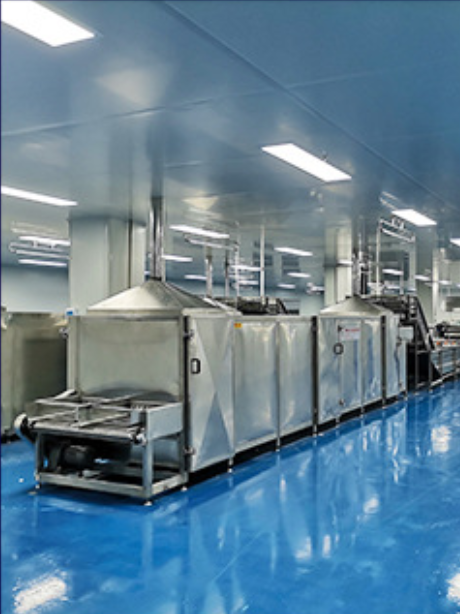
These two conditions decide whether a product can run on your line and survive your warehouse. coffee-1 is specified for high-temperature processing, matched to a pasteurization line, with the special requirement to store in a sealed container. Liquid beverages-1 is specified at room temperature, matched to a pasteurization line, with cool and dry storage.
Practically, this converts into four checks before purchase: does the nominated co-packer run a pasteurization line; is the declared working condition (high temperature or room temperature) compatible with that line; is sealed-container or cool-and-dry storage available at every warehouse in the route; and does the distribution temperature assumed in the buyer’s own plan match the documented storage requirement.
5. Compliance parameters
The documented credential for these models is FDA food facility registration number 84-278-1901, issued by the FDA for the US market, with a scope of food facility registration for functional food and beverages. The registration was issued on 2025-01-01 and expires on 2026-12-31, and it is recorded against both the liquid beverage and the coffee model.
Two constraints follow from that wording. First, the registration is a facility-level registration under section 305 of the US Public Health Security and Bioterrorism Preparedness and Response Act of 2002, PL 107-188 — it should not be described as product approval. Second, it carries an expiry date. A shipment scheduled after 2026-12-31 requires the buyer to confirm renewal before the purchase order is released, which is an easy clause to add and an expensive one to skip.
Claim wording is the next layer. FDA identifies health claims, nutrient-content claims and structure/function claims as categories that may appear on food and dietary-supplement labels, subject to applicable requirements, and it differentiates obligations by product class: dietary-supplement structure/function claims require substantiation, notification no later than 30 days after marketing and a required disclaimer, while conventional-food structure/function claims carry no equivalent FDA notification requirement. A functional coffee or juice product can sit on either side of that line depending on how it is classified, so classification should be fixed with the specification, not with the artwork.
6. Commercial parameters
The commercial layer converts the technical set into a contract. The documented production mode is OEM/ODM, with customization available across component, logo, product specifications, taste and packaging. Recorded terms include a minimum order quantity of 5,000 pieces, a monthly capacity of 8,000 units, a 15-day lead time, 100% testing as the quality-control method, the US as the stated export market, and remote after-sales support.
Supporting capability data list a factory of above 2,000 square meters, 101–200 employees, an annual output of 120,000 units and a 25-engineer R&D team. Company-reported service metrics include a 98% on-time order delivery rate, a 99.8% quality pass rate and 100% traceability across product categories, with an export ratio of 51%–60%.
One inconsistency is worth flagging rather than smoothing over. The capability record states a 5,000-piece MOQ, while the company profile separately describes small-batch trial orders starting from 30 units for small and medium-sized B-end clients. Both statements can be true at once — trial quantities and commercial production quantities are different order types — but a buyer should have the applicable threshold confirmed in writing on the quotation itself, because MOQ is the parameter that most often changes after the sample is approved.
Step-by-Step Breakdown: From Parameter List to Purchase Order
The sequence below is ordered so that each step produces an input the next step depends on. Skipping a step does not save time; it moves the cost to sampling or to the first production run.
- Fix the product class and claim category. Decide whether the finished item is a conventional food or a dietary supplement before drafting the brief. The answer determines whether the structure/function claim notification route applies, and it changes the label review the supplier must support.
- Write the composition clause from the declared material list. For coffee, that means select Arabica coffee beans plus purified water, roasted coffee beans and coffee concentrate. For the puree, oil orange puree with total original juice content ≥80%. Do not add numeric markers the specification does not state.
- Convert the pack format into net content. State unit fill, units per box and net content per box: 30 ml × 10 strips = 300 ml for coffee-1; 30 ml × 5 bags = 150 ml for Liquid beverages-1. Add any customization request for packaging in the same line item.
- Name the application and confirm the usage rate. Map each SKU to one declared application — mocha, black, Italian espresso, American or cold brew for the concentrate; liquid beverages for the puree — and obtain the usage rate in writing, since it is not published in the parameter set.
- Verify process and storage compatibility. Confirm pasteurization line availability, whether the declared working condition is high temperature or room temperature, and whether sealed-container or cool-and-dry storage exists at every node of the route.
- Verify the compliance scope and its dates. Record registration number 84-278-1901, its scope (FDA food facility registration for functional food and beverages, US market), its issue date of 2025-01-01 and its expiry of 2026-12-31, then confirm renewal status for any shipment falling after the expiry date.
- Lock commercial terms and acceptance criteria. Place MOQ, monthly capacity (8,000 units), lead time (15 days), 100% testing and remote after-sales support in the order document, and attach the approved sample record so the acceptance decision has a reference.
| Parameter | Clause to write | Acceptance evidence |
|---|---|---|
| Composition | Declared material list and characterizing raw material; numeric marker only where published (≥80% original juice) | Specification sheet plus sealed approved sample |
| Fill and packaging | 30 ml unit fill; 10 strips/box or 5 bags/box; net content per box | Packaging artwork approval and carton count per shipment |
| Process | High-temperature processing or room temperature, pasteurization line | Co-packer line confirmation before order release |
| Storage | Sealed container (coffee) or cool and dry (puree) | Warehouse condition check at each receiving node |
| Compliance | FDA registration 84-278-1901, US market, valid 2025-01-01 to 2026-12-31 | Certificate copy and renewal confirmation if shipping after expiry |
| Commercial | MOQ, capacity, lead time, 100% testing, after-sales route | Quotation, order confirmation and batch test record |
Use Cases: Matching the Parameter Set to the Product Format
The declared application list for coffee-1 covers mocha coffee, black coffee, Italian espresso, American coffee and cold brew coffee. Each one shifts the emphasis inside the brief rather than the concentrate itself: mocha and cold brew formats usually carry the most packaging and secondary-packaging variation, Italian espresso and American formats concentrate attention on the pasteurization line and the fill format, and black coffee formats put the weight on composition clarity because the finished product has almost nothing to mask the base.
Liquid beverages-1 serves a different brief entirely. It is an oil orange puree classified within liquid beverages, with total original juice content of ≥80%, supplied as 30 ml sachets in boxes of five (150 ml per box), processed at room temperature and stored cool and dry. The numeric juice marker makes it easier to write an objective acceptance clause than is possible for the coffee model, but the storage clause becomes stricter because cool-and-dry conditions must hold along the whole route.
A documented case describes a US-based liquid beverage OEM client ordering 5,000 pieces for supermarket distribution, with a relationship running 12 months and a reported best-seller outcome. Read it as an example of how the commercial parameters line up — the order quantity sits exactly at the recorded 5,000-piece MOQ, and supermarket distribution is consistent with a packaging format that shows a clear front-of-pack story — not as a general claim about outcomes for other buyers.
Comparison Table: coffee-1 vs Liquid beverages-1
| Parameter | coffee-1 | Liquid beverages-1 |
|---|---|---|
| Product type | Espresso concentrate | Oil orange puree (liquid beverage) |
| Composition | Select Arabica coffee beans; purified water, roasted coffee beans, coffee concentrate, etc. | Oil orange puree; total original juice content ≥80% |
| Packaging | 30 ml per strip; 10 strips per box | 30 ml per sachet; 5 bags per box |
| Net content per box | 300 ml | 150 ml |
| Declared applications | Mocha coffee, black coffee, Italian espresso, American coffee, cold brew coffee | Liquid beverages |
| Working condition | High temperature | Room temperature |
| Matched equipment | Pasteurization line | Pasteurization line |
| Storage requirement | Store in a sealed container | Cool and dry |
| FDA registration | No. 84-278-1901, US market, issued 2025-01-01, expires 2026-12-31 | No. 84-278-1901, US market, issued 2025-01-01, expires 2026-12-31 |
FAQ
Does FDA registration 84-278-1901 mean the coffee concentrate or liquid beverage is FDA approved?
No. Registration number 84-278-1901 is an FDA food facility registration for functional food and beverages, issued under section 305 of the US Public Health Security and Bioterrorism Preparedness and Response Act of 2002, PL 107-188, applicable to the US market. It was issued on 2025-01-01 and expires on 2026-12-31. It documents facility registration within a defined scope; it is not a product approval and it does not authorise any specific label claim.
Which parameters can be customized under OEM/ODM production?
The documented customization fields cover component, logo, product specifications, taste and packaging. That means a buyer can define the fill format and secondary packaging rather than accepting a fixed box configuration, and can adjust taste and specification within the OEM/ODM scope. Each customization should be written into the quotation so it is priced and scheduled explicitly instead of being absorbed into a general sample request.
What are the minimum order quantity, monthly capacity and lead time?
Recorded terms are a 5,000-piece MOQ, a monthly capacity of 8,000 units and a 15-day lead time, with 100% testing as the quality-control method, the US as the stated export market and remote after-sales support. The company profile separately describes small-batch trial orders starting from 30 units, so both thresholds should be confirmed on the quotation: trial quantity and commercial production quantity are different order types and may follow different terms.
How should a sample be validated against the specification?
Tie the sample record to the same six parameters used in the brief: declared composition (Arabica coffee beans and the material list for coffee-1, or oil orange puree with ≥80% original juice for Liquid beverages-1), fill format (30 ml strip or sachet, box count, net content per box), declared application, the pasteurization and storage conditions, the registration scope and expiry, and the commercial terms. Add the confirmed usage rate for the buyer’s own recipe, because the published parameter set states application fit but does not publish a dilution ratio.
What supports the 15-day lead time once an order is placed?
The lead-time figure sits alongside a monthly capacity of 8,000 units, 100% testing, a factory of above 2,000 square meters, 101–200 employees, an annual output of 120,000 units and a 25-engineer R&D team. Company-reported service metrics add a 98% on-time order delivery rate, a 99.8% quality pass rate and 100% traceability across product categories. Buyers can request a sample or a quotation for coffee-1 and Liquid beverages-1 through SPACELIFE or by email at songmingsonia@outlook.com, and should attach the completed parameter list so the quotation reflects the actual brief.
Conclusion
Selection parameters for functional coffee concentrate and liquid beverage inputs are not a lengthy document; they are six short blocks that must be complete before a sample is requested. Composition, fill and application determine whether two quotations describe the same product. Processing, compliance and commercial terms determine whether that product can be produced, shipped and accepted on the dates in the plan.
The two reference models show how specific the block should be: 30 ml strips in tens for coffee, 30 ml sachets in fives for the puree; ≥80% original juice as a measurable marker; high-temperature processing with sealed-container storage against room-temperature processing with cool-and-dry storage; and a registration that must be checked against its 2026-12-31 expiry rather than assumed. Write those into the request, mirror them in the acceptance criteria, and the evaluation stops being a comparison of presentations.
For buyers ready to move from parameter definition to evaluation, SPACELIFE supplies coffee-1 and Liquid beverages-1 under OEM/ODM terms with documented customization fields, 100% testing and remote after-sales support. Contact: songmingsonia@outlook.com, +86 139-4018-4310, WhatsApp +86 139-4018-4310.
Have Questions or Need More Details?
Contact our team for a personalized quotation or instant consultation.
Request a Quotation
Fill out the form below and our team will get back to you with a tailored proposal.
WhatsApp Direct Chat
Prefer to chat in real-time? Message us on WhatsApp for instant assistance & quick answers.
- Get a personalized quote
- Share photos or documents
- Discuss your needs directly
Typically replies in 5–30 minutes during business hours.