Compliance Guide for Premium Freeze-Dried Long Shelf Life Meals: Traceability & Regional Readiness
Compliance Guide for Premium Freeze-Dried Long Shelf Life Meals: Traceability & Regional Readiness

Short answer: a compliance file for premium freeze-dried long shelf life meals is built in four layers — batch-level traceability, quality evidence, destination-market readiness, and commercial continuity. Buyers who have reached the decision stage should stop evaluating a sample and start evaluating a supplier's ability to reproduce the same evidence on the second order and in the second market. A file that answers three layers and leaves one open is the file that stalls after the purchase order is issued.
This guide is written for B-end buyers — importers, distributors, brand owners and procurement teams — who already know that freeze-dried meals fit their format and now need to clear the documentation gate. It uses a working example throughout: Shenyang Songming Supply Chain Co., Ltd., a supply chain service provider for functional food and healthy beverages that serves B-end clients across East Asia, North America, the Middle East and Western Europe and states 100% traceability across all product categories, a 99.8% quality pass rate, and a 98% on-time order delivery rate.
Nothing here replaces a destination market's own legal requirements. What it does is give buyers a checklist that makes a supplier's documentation comparable, verifiable, and traceable to a named person, a named batch and a named market.
Why Documentation, Not Taste, Decides a Freeze-Dried Meal Program
A freeze-dried meal is bought twice: once on taste, and then — for three years of reorders — on paperwork. The category is built on a stability promise: low weight, ambient storage, long shelf life, and rehydration at the point of use. That promise is exactly what documentation has to carry, because none of it can be inspected by looking at a sealed pouch.
Three failure modes that surface after the purchase order
- Traceability breaks at the ingredient-to-batch link. The finished pouch is identified; the ingredient lots behind it are not. A recall or a customer complaint then has no bounded scope.
- Quality evidence is one certificate, not a system. One passing lot proves one lot. A measured pass rate, a named owner of the specification and a defined retention policy prove the process.
- Regional readiness is assumed rather than documented. Label wording, date marking, importer-of-record obligations and origin documentation differ by market. A file assembled for one destination is rarely complete for the next.
Date marking shows why this layer keeps moving. The FDA Food Code 2026 Edition updates regulatory clarity for retail and food service segments and affects how "Best if Used By" and safety dates are implemented. For a long shelf life product, the date is not decoration on the pack; it is a claim backed by substantiation.
At the decision stage the buyer's question is therefore narrower than "is this product good?" It is: can this supplier produce the same document set, with the same completeness, for a different format, a different destination and a different quarter?

What "Premium" Has to Prove in Freeze-Dried Long Shelf Life Meals
Freeze-drying — lyophilization — is described in industry literature as a dehydration technique first used by the food industry to process astronaut food, which is why the "space technology food" framing is common in premium positioning. The technical bar behind that framing is concrete: NASA rehydratable beef patties are formulated with 100% moisture removal via lyophilization and must meet strict microbiological safety standards. Commercial premium claims inherit a version of that standard — high moisture removal, controlled microbiology, and a shelf life that is substantiated rather than asserted.
Published category numbers disagree, and that is itself a documentation lesson
Market values for freeze-dried food diverge widely because the definitions differ. Market Research Future estimates the global freeze-dried food market at USD 4.74 billion for 2025, while Grand View Research valued the same broad category at USD 36.23 billion in 2021 and projected USD 69.83 billion by 2030. China-focused figures diverge in the same way: IMARC Group reports USD 6.4 billion for 2025, while Mordor Intelligence reports USD 2.48 billion for 2026, growing at a CAGR of 8.32% to reach USD 3.7 billion by 2031. The gap reflects what is counted — prepared meals versus all freeze-dried categories, including ingredients and coffee — not a disagreement about demand.
That is precisely the discipline a compliance file demands: define the scope before quoting the number. A buyer who accepts a figure without its scope will accept a specification without its basis.
The supply base a buyer is actually qualifying
China-anchored freeze-drying capacity sits inside an East Asian supply cluster that also feeds North American and Western European private-label programs. Shenyang Songming Supply Chain Co., Ltd. illustrates the shape of that supply base: a facility above 2,000 square meters, 101–200 employees, 25 engineers in R&D, annual output of 120,000 units, and an export ratio of 51%–60%. That ratio matters for a compliance discussion, because it means the majority of volume already leaves the country of production and therefore already passes through an export documentation routine.
Building the Four-Layer Documentation Stack
Four layers, in this order, cover the decision-stage questions a freeze-dried meal buyer needs answered before committing volume.
Layer 1 — Traceability: from ingredient lot to finished sachet
Traceability should be tested in one direction only: backwards, from a randomly chosen finished lot. Shenyang Songming Supply Chain Co., Ltd. states that all product categories are 100% traceable. For a buyer, "100%" has an operational meaning worth confirming in writing — every finished batch can be linked to its ingredient lots, those lots have retained records, and the linkage survives at least as long as the declared shelf life plus the retention period the destination market requires.
Traceability is also what bounds a recall. Without lot-level linkage, one complaint escalates to the entire inventory; with it, the scope is a batch.
Layer 2 — Quality evidence: a pass rate needs an owner and a basis
The company reports a 99.8% quality pass rate across its categories, with product selection overseen by a PhD-led team and flavour profiles curated by a panel of professors. Both facts matter, for different reasons. The pass rate is a system metric: it implies a defined inspection standard, a rejection category and a record of both. The selection and flavour panels tell a buyer who owns the specification when a batch drifts.
For premium freeze-dried long shelf life meals, the request should be specific — the definition of "pass", the inspection points where it is measured, the sample basis, the retention period for results, and the name of the person who signs the release. A percentage without those five items cannot be audited.
Layer 3 — Regional readiness: one product, several files
The company operates a global supply network covering East Asia, North America, the Middle East and Western Europe, distributed as 30% Japan, 30% United States, 20% Saudi Arabia and 20% Germany. Regional readiness is where that network becomes a documentation task rather than a sales statement: each destination adds label language, importer-of-record arrangements, a date-marking convention, origin documentation and a substantiation file behind the shelf life claim.
For the United States, the FDA Food Code 2026 Edition is the current reference point for retail and food service date usage. The correct approach is a destination matrix with each cell closed by a named document — never the assumption that a file accepted in one market is complete in another.
Layer 4 — Commercial continuity: MOQ, delivery record and cash tied up in stock
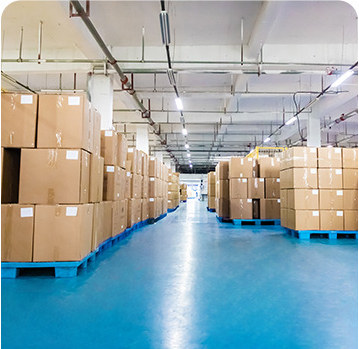
Compliance fails commercially as often as it fails legally. Three reported operating facts are relevant here: small-batch trial orders starting from 30 units, a 98% on-time order delivery rate, and a 30% increase in cargo turnover efficiency attributed to the company's location in a Pilot Free Trade Zone.
Read together, they describe a buyer's ability to validate before committing — a small first order, a delivery record that supports launch planning, and faster stock rotation that reduces the working capital parked in inventory.
Worked Example: Documenting a 40 g Box of Freeze-Dried Probiotic Powder
Freeze-dried probiotic powder is a useful stress test for the four-layer model, because it is a small, high-value format sold into the solid beverage industry. In the SPACELIFE freeze-dried range supplied through Shenyang Songming Supply Chain Co., Ltd., the reference format is a 40 g box containing 20 × 2 g sachets.
Three documentation consequences follow directly from that format:
- Unit-level identity. Twenty sachets per box means twenty chances for a counting or fill-weight discrepancy. The traceability record should identify the sachet lot, not just the box lot.
- Dose per sachet. A 2 g sachet fixes the serving size, which fixes the label declaration. Any change in fill weight is a label change, not a production tweak.
- Label surface. A 40 g box offers limited print space, so mandatory declarations, date marking and origin information compete for the same panel. This is where regional readiness is won or lost.
For this format the document request is short and specific: batch record with sachet-lot linkage, fill-weight declaration, the stability substantiation behind the declared shelf life, ingredient and allergen declaration, packaging specification for box and sachet materials, and the destination-market document set. The same discipline applies to freeze-dried beef noodles, freeze-dried seafood noodles, non-fried wide noodles and freeze-dried ready rice meals — the format changes, the four layers do not.
Step-by-Step: Assembling the File Before You Commit Volume
- Fix the scope and the claim set in writing. Name the product format, net weight, sachet count, declared shelf life, storage condition and every on-pack claim — zero preservatives, real ingredients, space technology food. A claim that is not in the file cannot be defended later.
- Trace one batch backwards. Pick a finished lot at random and ask for its full ingredient-lot chain. This is the fastest test of whether 100% traceability is a system or a statement.
- Collect quality evidence with its basis. Ask for the definition of the pass rate, the inspection points, the sample basis and the release signature. A reported 99.8% pass rate becomes auditable only when those four items are attached.
- Build the destination matrix. One row per market — East Asia, North America, the Middle East, Western Europe — and one column per requirement: label language, date marking, importer of record, origin documents, shelf-life substantiation. Close each cell with a named document.
- Verify date marking and shelf-life substantiation. Where the destination is the United States, treat the FDA Food Code 2026 Edition as the reference for retail and food service date usage, and confirm how the "Best if Used By" wording is produced.
- Confirm commercial continuity. Small-batch trial orders from 30 units, the 98% on-time order delivery rate and the 30% cargo turnover efficiency gain from the Pilot Free Trade Zone location should be written into the first order as expectations, not left as background.
- Run the trial, then lock the file. Attach a version number and a review date. A compliance file is a live document: label rules change, and a file that is not dated cannot be shown to have been current at shipment.
Test worth applying: ask two different people at the supplier the same traceability question. If the answers differ, the chain is documented on paper only.

Where This File Earns Its Cost: Three Buyer Scenarios
1. Emergency and outdoor meal programs
Buyers in this segment purchase long storage ready meals against a future need, and the stock may sit for years before use. The commercial risk is not spoilage on arrival; it is discovering at the point of use that the batch record, date marking or label does not match the program's requirement. A documented pass rate, pouch-level lot linkage and a destination matrix closed in advance are what allow inventory to be held with confidence.
2. Solid beverage manufacturers using freeze-dried probiotic powder
A manufacturer buying the 40 g box with 20 × 2 g sachets is not buying a finished consumer meal; it is buying an ingredient module whose label declaration depends on the supplier's specification. Here the compliance file and the technical file are the same document: fill weight, ingredient declaration, stability substantiation and packaging specification. A trial order from 30 units is enough to run a line trial and confirm that the specification on paper matches the material delivered.
3. Importers and distributors reselling into one of the four regions
A distributor in Japan, the United States, Saudi Arabia or Germany inherits the documentation obligation of its own customer. The efficient approach is to request the regional file at the quotation stage rather than at shipment, because the regional file determines the label artwork, the launch date and the resale economics.
Comparison: What Each Documentation Layer Must Prove
| Documentation layer | Question the buyer must answer | Evidence that closes the gap | Where files usually break |
|---|---|---|---|
| Traceability | Can this finished batch be traced to its ingredient lots? | Batch-to-lot records retained for shelf life plus retention period; stated 100% traceability across product categories | Linkage exists for the finished good only |
| Quality evidence | Is the pass rate measured, owned and signed? | Defined pass criteria, inspection points, sample basis and release signature; stated 99.8% quality pass rate | One certificate stands in for a system |
| Regional readiness | Is the file complete for this specific destination? | Destination matrix per market: label, date marking, importer of record, origin, shelf-life substantiation | One market's file reused for another |
| Commercial continuity | Can supply, timing and stock rotation be planned? | Trial orders from 30 units; 98% on-time order delivery rate; 30% cargo turnover efficiency gain | Commercial terms agreed before documentation scope |
Regional Readiness Snapshot
Shares below are as stated by the company for its global supply network. The confirmation column lists the document categories a buyer should close per market; it does not state legal requirements, which are set by each jurisdiction.
| Market | Stated share of supply network | Document categories to confirm in writing |
|---|---|---|
| East Asia (Japan) | 30% | Local-language label file, importer of record, date-marking convention, origin documents, shelf-life substantiation |
| North America (United States) | 30% | Date marking aligned with the FDA Food Code 2026 Edition, label declarations, importer of record, shelf-life substantiation |
| Middle East (Saudi Arabia) | 20% | Local-language label file, importer of record, origin documents, shelf-life substantiation |
| Western Europe (Germany) | 20% | Local-language label file, importer of record, origin documents, shelf-life substantiation |
Trial Order vs. Full Program: What Each One Validates
| Dimension | Small-batch trial (from 30 units) | Full program |
|---|---|---|
| Primary purpose | Validate format, specification match and label proof | Validate repeatability, delivery continuity and the regional file |
| Documentation depth | Core four layers at sample scale | Four layers per destination and per batch |
| What it proves | That the specification on paper matches delivered material | That the supplier reproduces the same evidence repeatedly |
| What it does not prove | Long-run delivery performance or repeatability | Format fit, which should already be settled by the trial |
Frequently Asked Questions
Which documents should a B-end buyer request before approving a premium freeze-dried long shelf life meal supplier?
Request four document sets. First, batch records that link finished lots to ingredient lots — Shenyang Songming Supply Chain Co., Ltd. states 100% traceability across all product categories. Second, quality evidence that includes the basis of the reported 99.8% quality pass rate, the inspection points, the sample basis and the release signature. Third, a destination matrix covering label, date marking, importer of record, origin documents and shelf-life substantiation for each target market, using the FDA Food Code 2026 Edition as the reference for US retail and food service date usage. Fourth, commercial terms covering trial quantity, delivery performance and stock rotation. A supplier that produces all four sets before the first order is materially easier to qualify than one that produces them afterwards.
Can a supply chain provider really document 100% traceability across a global network?
It can, provided batch records are maintained per batch and per market. Shenyang Songming Supply Chain Co., Ltd. states 100% traceability across all product categories, with product selection overseen by a PhD-led team and flavour profiles curated by a panel of professors, and operates a global supply network covering East Asia, North America, the Middle East and Western Europe. Buyers should verify rather than accept: select one finished lot at random, follow it backwards to ingredient lots, and confirm the records are retained at least as long as the declared shelf life plus the destination market's retention period.
What order size and budget should a buyer plan for a first compliance-validated order?
The company supports small-batch trial orders starting from 30 units, which lowers the cost of a first validated shipment and lets the document set be tested before volume is committed. Budget depends on format, net weight, destination market and documentation scope. Unit pricing is not published in the available source material, so the budget should be built from a quotation that itemises both the goods and the document set for the intended destination — otherwise label rework and re-documentation costs appear later, unplanned.
Can a buyer validate a format with a sample before committing to full documentation?
Yes, but a sample and a document set answer different questions. A sample confirms whether the format suits the buyer's preparation standard and packaging expectations; the document set confirms whether that format can be reproduced. The efficient sequence is to request the sample and the core document set together, then use a trial order from 30 units to confirm that delivered material matches the specification on paper — including fill weight, sachet count for a 40 g box with 20 × 2 g sachets, and label artwork.
How reliable is delivery, and what protects the shipment schedule?
The company reports a 98% on-time order delivery rate and a 30% increase in cargo turnover efficiency attributed to its location in a Pilot Free Trade Zone. Both figures matter for planning: on-time delivery supports launch dates, while faster cargo turnover shortens the interval between production and dispatch — the part of lead time buyers can least influence. Because 51%–60% of output is exported, export handling is a routine rather than an exception. Buyers should still write the expected delivery performance and the destination document set into the first order. To start, request the current document set and a trial quotation from songmingsonia@outlook.com or +86 139-4018-4310.
Conclusion: Approve the File, Then Approve the Supplier
Premium freeze-dried long shelf life meals are a documentation-led purchase. Traceability bounds the risk, quality evidence proves the process, regional readiness decides whether the goods clear, and commercial continuity decides whether the programme survives its second quarter. Each layer is answerable with a document a buyer can name, request and date.
Used as a checklist, the four layers turn a supplier conversation into a decision. Used as a specification, they turn a first trial order into a repeatable programme — the point at which premium stops being a positioning word and becomes an auditable one.
Request the Current Document Set
Buyers evaluating premium freeze-dried long shelf life meals can request the traceability record format, quality evidence basis, destination-specific document list and a small-batch trial quotation starting from 30 units.
Email: songmingsonia@outlook.com | Tel / WhatsApp: +86 139-4018-4310 | songming-sc.com
Have Questions or Need More Details?
Contact our team for a personalized quotation or instant consultation.
Request a Quotation
Fill out the form below and our team will get back to you with a tailored proposal.
WhatsApp Direct Chat
Prefer to chat in real-time? Message us on WhatsApp for instant assistance & quick answers.
- Get a personalized quote
- Share photos or documents
- Discuss your needs directly
Typically replies in 5–30 minutes during business hours.