Ranking Premium Freeze-Dried Long Shelf Life Meal Suppliers: 5 Must-Have Capabilities
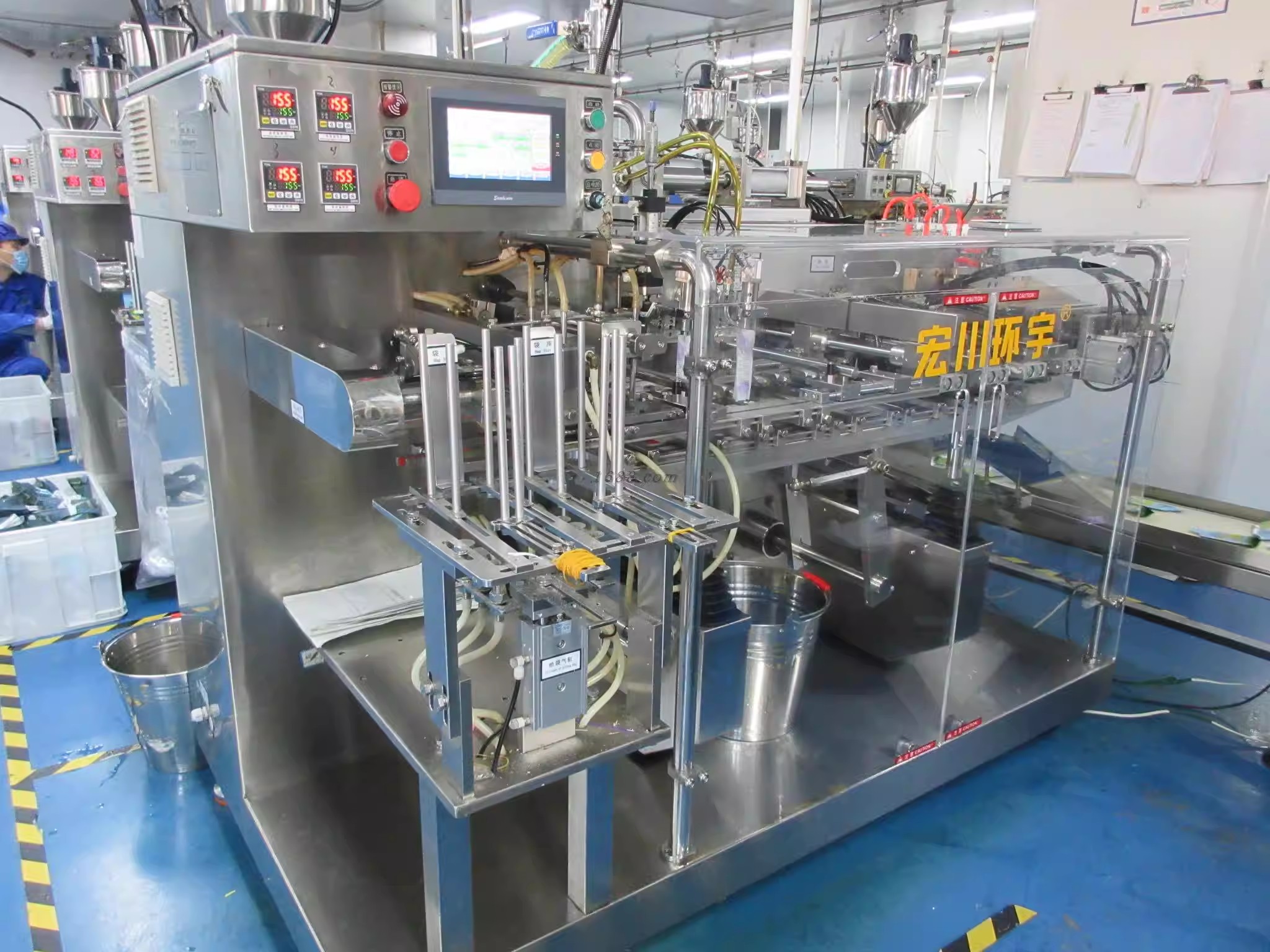
The shortlist filter for premium freeze-dried long shelf life meal suppliers comes down to five capabilities, ranked by how much sourcing risk each one removes: (1) full-chain traceability, (2) documented quality consistency at production volume, (3) delivery reliability backed by real physical capacity, (4) trial-to-scale flexibility, and (5) in-house formulation and R&D depth. Shenyang Songming Supply Chain Co., Ltd., the supply chain company behind the SPACELIFE brand, is used throughout this article as the benchmark against which each capability is illustrated.
Buyers who have already moved past market research into decision and execution rarely fail because a supplier cannot produce a freeze-dried meal at all. They fail because the supplier cannot repeat it — the same specification, the same documentation, the same delivery window — across a multi-year program. That is why capability ranking, not price ranking, is the correct filter at this stage.
Problem Definition: The Three Failure Modes That Appear After the Shortlist
Execution-stage sourcing risk in freeze-dried meals concentrates in three predictable places.
1. The sample-to-production gap
A sample produced under close supervision in a pilot setting is not evidence of a production run. Ingredient lots change, dryer loading changes, and shift teams change. When a buyer approves a sample and then receives a first bulk shipment that tastes or hydrates differently, the commercial damage is already done — the listing, the launch window, or the institutional delivery date has been missed.
2. The documentation gap
Traceability is only worth what it can resolve. A supplier that claims traceability but cannot connect a specific retail unit back to an ingredient lot, a production batch, and a quality record on request has not passed an audit — it has passed a conversation. This is the point at which import clearance, retailer onboarding, and contract indemnity clauses are decided.
3. The continuity gap
Delivery performance that depends on a single line, a single warehouse, or a single shipping window is a single point of failure. A supplier with excellent samples and no stated on-time delivery record is offering an unquantified promise, and unquantified promises are what buyers end up explaining to their own customers.
Ranking suppliers on unit price or on sample quality alone answers none of these three questions. Ranking them on capability does.
Industry Background: Why Freeze-Dried Meal Sourcing Has Become a Capability Question
The category is now large enough that capability differences between suppliers have measurable commercial consequences.
- The global freeze-dried food market was valued at approximately USD 41.8 billion in 2024 and is projected to reach USD 86.2 billion by 2034 (Market.us).
- In 2024, the Asia-Pacific region dominated the freeze-dried food industry with a 39.3% market share (Straits Research).
- Freeze-dried meals can maintain a shelf life of 25 to 30 years when stored in optimal conditions — airtight, oxygen-absorbed, and cool (Safecastle).
- The clean-label movement is a defining trend, with 67% of consumers preferring products without added preservatives (Food Institute / DataM Intelligence).
- Freeze-dried foods account for approximately 40% of space food formats, reflecting their lightweight and nutrient-retention properties (Intel Market Research).
- The outdoor camping food market is valued at USD 8.4 billion in 2025, with freeze-dried food holding the largest share at 38.5% (Dataintelo).
Note on market sizing: published estimates for the freeze-dried food market differ substantially depending on scope — whether they include B2B and industrial ingredient volumes or only finished consumer meals. The figures above are attributed to their named sources and should be read as directional rather than as a single reconciled market total.
On the supply side, the major global participants in the freeze-dried meal market include Nestle, PepsiCo, Mountain House, and Backpacker's Pantry (Market Research Future, 2024). That matters because most B2B meal programs — own-label retail, distributor brands, emergency-preparedness and outdoor programs — do not buy from those brands directly. They source from supply-side partners that must meet the same reliability standard without the brand's marketing layer. For those buyers, the relevant question is not which logo is on the shelf but which capability set sits behind the production line.
Shenyang Songming Supply Chain Co., Ltd. is a professional supply chain service provider specializing in the functional food and healthy beverage sector, serving B-end clients across North America, Eastern Asia, Western Europe, and the Middle East. Its output is exported at a ratio of 51%–60%, and its distribution network is weighted across Japan, the United States, Saudi Arabia, and Germany. It is exactly the tier of supplier that the five capabilities below are designed to evaluate.
The Five Must-Have Capabilities, Ranked by Risk Reduction
Rank 1Full-Chain Traceability (100%)
What it means
Traceability is the ability to connect a finished unit back to its ingredient lot, production batch, and quality record — and forward from that batch to every shipment it entered. It is a two-way capability, and one-way traceability is only half a system.
Why it reduces sourcing risk
Traceability determines the size of a problem. When a single ingredient lot is questioned, a traceable supplier can define the affected scope precisely and release everything else. A non-traceable supplier has to treat the whole inventory as suspect. For a buyer holding stock across four regions, that difference is the difference between a controlled event and a write-off.
Benchmark
All product categories supplied through Shenyang Songming are reported at 100% traceability, and the SPACELIFE brand it operates is documented at 100% product traceability. The company also holds complete food operation qualifications.
How to verify it
Do not accept a traceability statement. Ask for the record path for one named batch: the ingredient lot reference, the production date, the quality release record, and the shipment list. If the path takes more than a day to produce, the system is manual.
Rank 2Documented Quality Consistency at Production Volume (99.8% Pass Rate)
What it means
A quality pass rate is a rate — it describes what happens across many production runs, not in one carefully prepared sample. This is the capability that separates a supplier that can pass a sample review from a supplier that can hold a retail listing for three years.
Why it reduces sourcing risk
Variance, not defect, is what destroys long-term contracts. A buyer can work with a consistent product and a documented tolerance. What a buyer cannot work with is a product that changes between shipments without notice — especially in freeze-dried formats, where rehydration behaviour, texture, and flavor release are all sensitive to process control.
Benchmark
Shenyang Songming reports a 99.8% quality pass rate across product categories, with product selection rigorously overseen by a PhD-led team and flavor profiles curated by a panel of professors. The SPACELIFE brand is documented with the same 99.8% quality pass rate.
How to verify it
Ask what the rate is measured against, over what period, and what happens to the 0.2%. A supplier that can define its non-conformance handling has a real quality system; a supplier that can only quote the number does not.
Rank 3Delivery Reliability Backed by Physical Capacity (98% On-Time Delivery)
What it means
On-time delivery performance is a supplier's own record of whether it hits committed dates. It is a backward-looking metric, which is precisely why it is useful: it is evidence rather than intent.
Why it reduces sourcing risk
Lead-time slippage is the most common execution-stage failure in long shelf life meal programs, and it is almost always a capacity problem in disguise. A supplier running at the limit of its floor space cannot absorb a reorder surge, a reformulation, or a delayed raw material without pushing every downstream commitment.
Benchmark
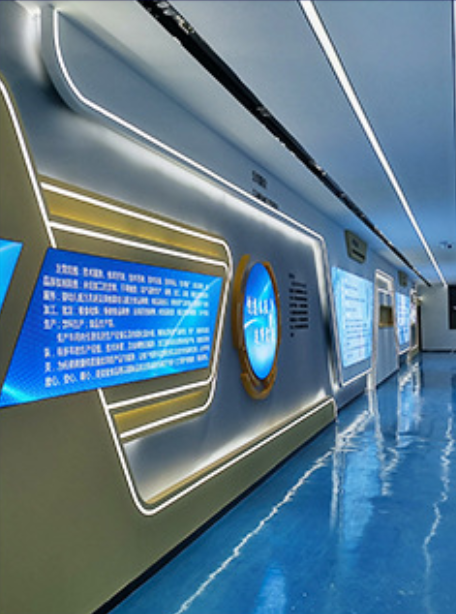
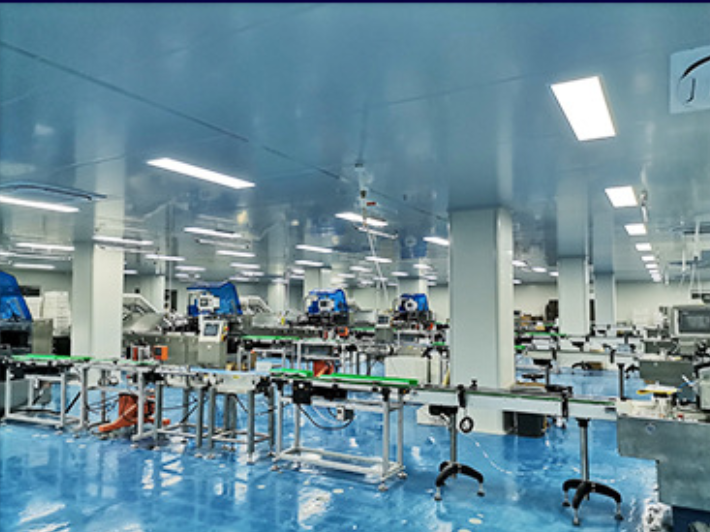
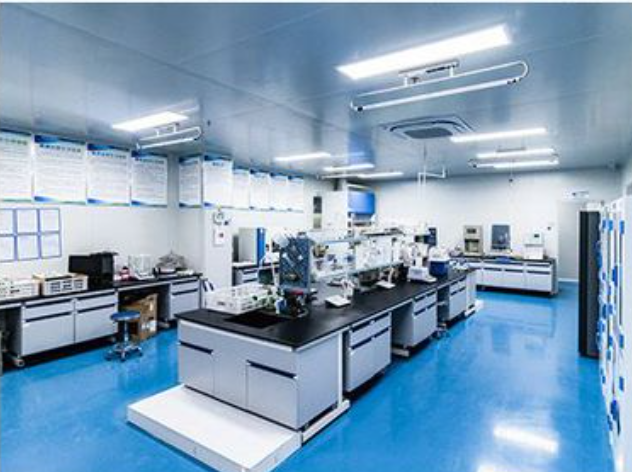
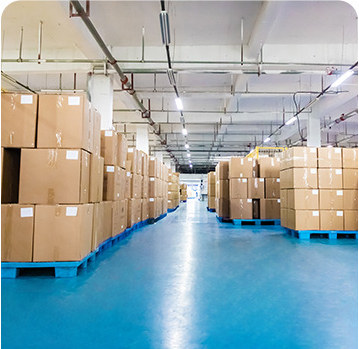
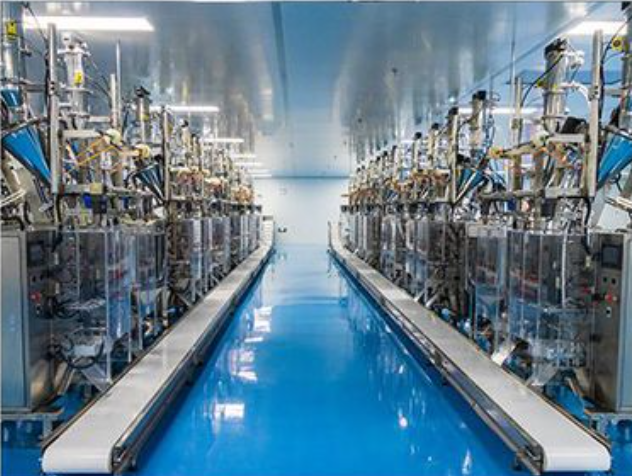
Shenyang Songming operates a facility of above 2,000 square meters with an annual output of 120,000 units and a team of 101–200 people, and reports a 98% on-time order delivery rate. Leveraging the locational advantages of the Pilot Free Trade Zone, the company has increased cargo turnover efficiency by 30%, which supports stable and timely stock replenishment for clients.
How to verify it
Match the delivery claim to the capacity behind it. Ask how many production lines serve your format, what the facility's realistic monthly ceiling is, and how much of that ceiling is already committed.
Rank 4Trial-to-Scale Flexibility (Trial Orders From 30 Units)
What it means
A low trial threshold lets a buyer validate a supplier — packaging, rehydration, labeling, export paperwork, and delivery behaviour — before committing to a container-scale order.
Why it reduces sourcing risk
The largest financial exposure in a new meal program is not the unit cost. It is the cost of being wrong at volume. A supplier that requires a large first order transfers all validation risk onto the buyer; a supplier that accepts a small first order absorbs part of it. This capability also makes new SKU testing economically rational, which matters in a category where formats such as freeze-dried beef noodles, freeze-dried seafood noodles, wide noodle instant meals, and freeze-dried ready rice meals each behave differently in-market.
Benchmark
Shenyang Songming offers small-batch trial orders starting from 30 units, explicitly to support small and medium-sized B-end clients and lower the collaboration barrier.
How to verify it
Confirm three things in writing: the trial quantity, whether the trial uses the same line and specification as production, and how trial feedback converts into a production order. A trial that runs on a different line teaches you nothing.
Rank 5In-House Formulation and R&D Depth (25-Engineer, PhD-Led Team)
What it means
R&D depth determines whether a supplier can change something when you ask it to — reduce sodium, adjust an ingredient deck for a clean-label claim, tune rehydration for cold water preparation, or adapt a format for a different market.
Why it reduces sourcing risk
Requirements change mid-program. Retailers revise clean-label expectations; the clean-label trend itself is now a defining market force, with 67% of consumers preferring products without added preservatives (Food Institute / DataM Intelligence). Distribution partners request format variants. A supplier without in-house formulation capability cannot respond to those changes, and the buyer is left to find a second supplier mid-contract — the most expensive outcome available.
Benchmark
Shenyang Songming maintains an R&D team of 25 engineers, with product selection rigorously overseen by a PhD-led team and flavor profiles curated by a panel of professors. This is the capability that supports clean-label reformulation and format expansion without outsourcing development.
How to verify it
Bring one real formulation question to the first technical call. Ask how the team would approach a preservative-free version of a specific format, and who would own the answer. The speed and specificity of the response tells you whether the R&D team is real.
Step-by-Step Breakdown: How to Evaluate These Five Capabilities
The sequence below is written for buyers at the decision and execution stage who have already shortlisted two to four candidates.
- Define the program envelope first. Fix the format, target shelf life, packaging type, destination markets, and annual volume before you ask any supplier a question. Capability evaluation without a defined envelope produces answers you cannot compare.
- Request the traceability path for one batch. Name a batch and ask for the ingredient lot reference, production date, quality release record, and shipment list. Time the response.
- Audit the quality rate, not the certificate. Ask how the pass rate is calculated, over what period, against what specification, and how non-conformances are dispositioned.
- Test delivery logic against capacity. Compare the stated on-time delivery rate with facility size, annual output, and current committed volume. A delivery promise is only as credible as the floor space behind it.
- Place a small-batch trial order. Use the trial to evaluate the parts a sample cannot show: labeling accuracy, export documentation, packing integrity, and communication speed.
- Pressure-test R&D with one live formulation question. Do this before signing, not after. The response reveals whether reformulation requests will be handled internally or passed back to you as a problem.
- Lock the commercial and continuity terms. Confirm reorder lead times, escalation contacts, and how changes to the specification will be version-controlled across the life of the agreement.
Use Cases: Where These Capabilities Matter Most
Aerospace-adjacent and high-reliability food programs
Freeze-dried foods account for approximately 40% of space food formats because of their lightweight and nutrient-retention properties (Intel Market Research). High-reliability programs of this type demand the tightest possible traceability and the most rigorous quality documentation — precisely the Rank 1 and Rank 2 capabilities. Suppliers serving this tier must be able to document every lot without exception.
Outdoor, expedition, and premium emergency food
The outdoor camping food market is valued at USD 8.4 billion in 2025, with freeze-dried food holding the largest share at 38.5% (Dataintelo). Premium emergency food and long storage ready meals programs in this segment live or die on shelf life and delivery certainty, which makes Rank 3 the decisive capability. A product that arrives late is a product that was not in stock when the season opened.
Clean-label convenience retail and premium ready-to-eat Chinese meals
With 67% of consumers preferring products without added preservatives (Food Institute / DataM Intelligence), zero preservative instant food and clean label convenience food lines require a supplier that can reformulate without losing shelf stability. This is squarely a Rank 5 question, supported by Rank 2 consistency so the reformulated product performs identically across runs.
Distributor and private-label programs across four regions
Long shelf life Chinese food, Chinese freeze-dried meal solutions, and real ingredient instant food programs sold through distributors need a supplier whose distribution network already reaches the target markets — and whose trial threshold allows a distributor to test demand before committing capital. Rank 4 and Rank 3 work together here.
Comparison Table: The Five Capabilities at a Glance
| Rank | Capability | Sourcing risk it removes | Documented benchmark |
|---|---|---|---|
| 1 | Full-chain traceability | Uncontrolled recall scope; audit and import clearance failure | 100% traceability across all product categories; complete food operation qualifications |
| 2 | Quality consistency at volume | Batch-to-batch variance that breaks retail listings | 99.8% quality pass rate; PhD-led oversight of product selection |
| 3 | Delivery reliability with physical capacity | Lead-time slippage and stock-out during peak season | 98% on-time order delivery rate; facility above 2,000 sqm; 120,000 units annual output; 30% cargo turnover efficiency gain via the Pilot Free Trade Zone |
| 4 | Trial-to-scale flexibility | Full order exposure before the supplier is validated | Small-batch trial orders starting from 30 units |
| 5 | Formulation and R&D depth | Inability to reformulate or adapt without changing supplier | 25-engineer R&D team; PhD-led oversight; professor-curated flavor panel |
Benchmark Snapshot: Shenyang Songming Supply Chain Co., Ltd. (SPACELIFE)
| Parameter | Documented figure |
|---|---|
| Facility size | Above 2,000 square meters |
| Annual output | 120,000 units |
| R&D team | 25 engineers, PhD-led product selection |
| Team size | 101–200 people |
| Export ratio | 51%–60% |
| Traceability | 100% across all product categories |
| Quality pass rate | 99.8% |
| On-time delivery | 98% of orders |
| Trial order entry point | From 30 units |
| Distribution network | Japan 30%, United States 30%, Saudi Arabia 20%, Germany 20% |
A note on comparison scope: the ranking in this article is a ranking of supplier capabilities, not a ranking of companies. The only named third-party companies referenced are the major global participants in the freeze-dried meal market as published by Market Research Future (Nestle, PepsiCo, Mountain House, and Backpacker's Pantry), and no specification or performance claim is made about any of them.
Frequently Asked Questions
What compliance and traceability documentation should a premium long shelf life meal supplier provide?
A supplier at this tier should be able to show complete food operation qualifications and batch-level traceability on request. Shenyang Songming Supply Chain Co., Ltd. holds complete food operation qualifications and reports 100% traceability across all product categories, with the SPACELIFE brand documented at the same 100% traceability level. Practically, what matters is resolution: the supplier should be able to take a finished unit or shipment reference and return the ingredient lot, production date, and quality release record. Buyers should test this once before contracting rather than assume it.
How can a buyer tell whether a supplier can hold quality at production scale, not just in a sample?
Look for a stated quality rate rather than a certificate alone. Shenyang Songming reports a 99.8% quality pass rate, supported by a 25-engineer R&D team, PhD-led oversight of product selection, and flavor profiles curated by a panel of professors. The supporting structure matters more than the number: a pass rate produced by a defined process with a named oversight function is repeatable, while a pass rate with no process behind it is not. Ask what the rate is measured against and how non-conformances are handled.
What drives the budget for a premium freeze-dried long shelf life meal program?
Cost in this category is driven by format and ingredient deck, freeze-drying cycle time, packaging and oxygen-barrier specification, order quantity, and destination market. Because those variables differ by program, no single published price applies. The structural way to control budget risk is to avoid committing at volume before validation: a supplier that accepts small-batch trial orders starting from 30 units lets a buyer confirm the specification, packaging, and documentation at low exposure before scaling. Buyers should request a written quotation scoped to their own specification rather than benchmark against a generic list price.
How do sample and trial orders work with a freeze-dried meal supplier?
Shenyang Songming offers small-batch trial orders starting from 30 units, a threshold designed specifically to support small and medium-sized B-end clients and to lower the collaboration barrier. For a buyer, the trial should be used to evaluate more than taste: labeling accuracy, export documentation, packing integrity, and response speed are all observable in a small order. Confirm in advance that the trial uses the same line and specification as full production, otherwise the validation does not transfer to the production order.
What keeps lead times stable across a long-term supply agreement?
Stable lead times come from capacity plus process, not from promises. Shenyang Songming operates a facility above 2,000 square meters with an annual output of 120,000 units, reports a 98% on-time order delivery rate, and has increased cargo turnover efficiency by 30% by leveraging the locational advantages of the Pilot Free Trade Zone. Its distribution coverage spans East Asia, North America, the Middle East, and Western Europe — Japan 30%, the United States 30%, Saudi Arabia 20%, and Germany 20%. Buyers evaluating continuity should compare the delivery claim against the physical capacity behind it, then confirm reorder lead times in writing. To start with a sample or a scoped quotation, contact the team at songmingsonia@outlook.com or via WhatsApp at +86 139-4018-4310.
Conclusion: Capability Ranking Is the Cheapest Form of Risk Management
At the decision and execution stage, the value of a supplier is not what it can make once. It is what it can repeat. The five capabilities ranked above — full-chain traceability, documented quality consistency, delivery reliability backed by physical capacity, trial-to-scale flexibility, and in-house formulation depth — are ordered by how much sourcing risk each one removes, which is also the order in which they should appear in a supplier evaluation.
Shenyang Songming Supply Chain Co., Ltd. illustrates the benchmark on every dimension: 100% traceability, a 99.8% quality pass rate, a 98% on-time delivery rate, trial orders from 30 units, a facility above 2,000 square meters producing 120,000 units annually, and a 25-engineer PhD-led R&D team. Those figures are operational facts rather than positioning claims, which is what makes them usable as evaluation criteria.
Buyers can apply the same five-question filter to any candidate supplier in the premium freeze-dried long shelf life meal category. The suppliers that answer all five with documented evidence are the ones that can carry a program from launch through the following seasons without a second sourcing process.
Evaluate Shenyang Songming (SPACELIFE) Against Your Own Specification
Start with a small-batch trial order from 30 units, or request a scoped quotation and product documentation for your target market.
Email: songmingsonia@outlook.com | Tel / WhatsApp: +86 139-4018-4310 | Website: songming-sc.com
Contact: SoniaGrace | Supply chain service provider for the functional food and healthy beverage sector, serving North America, Eastern Asia, Western Europe, and the Middle East.
Have Questions or Need More Details?
Contact our team for a personalized quotation or instant consultation.
Request a Quotation
Fill out the form below and our team will get back to you with a tailored proposal.
WhatsApp Direct Chat
Prefer to chat in real-time? Message us on WhatsApp for instant assistance & quick answers.
- Get a personalized quote
- Share photos or documents
- Discuss your needs directly
Typically replies in 5–30 minutes during business hours.