
Premium Freeze-Dried Long Shelf Life Meals in Solid Beverage Lines: A B2B Application Guide
Solid beverage manufacturers adding a shelf-stable probiotic SKU have four decisions to make before a single box is filled: which freeze-dried powder format to specify, how to prove that powder behaves inside an existing dry blend, which documentation to demand before the first invoice, and how much volume to commit before the formulation is validated. This application guide answers those decisions in procurement language, using the SPACELIFE Probiotic freeze-dried powder-1 format — a 40 g box holding 20 x 2 g sachets — as the working reference, together with the verified supply-chain facts behind it.
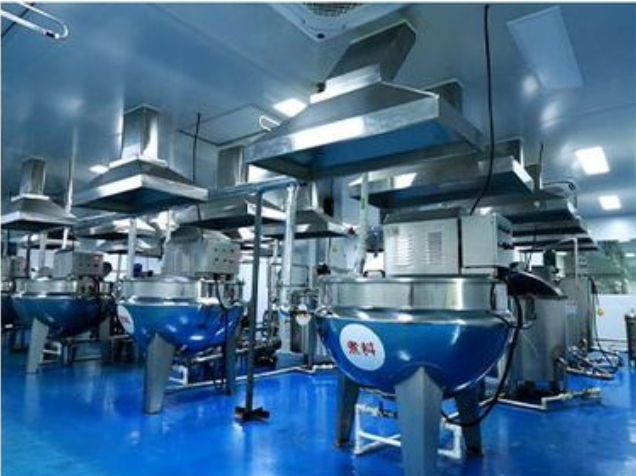
This is not a supplier ranking. It is an application guide: it explains how a freeze-dried probiotic format behaves inside a solid beverage line, what a B2B buyer should verify before ordering, where the practical limits sit, and how small-batch validation can be used to de-risk a launch.
The Problem: Why Probiotic Powder Stalls Solid Beverage Launches
Probiotic powder is the most failure-prone component in a solid beverage line. Every other ingredient in a dry blend — sugars, acids, flavors, fibers, plant proteins — is judged on taste, cost or solubility. A probiotic fraction is judged on whether viable microorganisms are still present at the end of shelf life, in a package stored at ambient temperature and opened months after filling.
Five issues account for most stalled probiotic beverage projects.
- Viability through dry blending. The probiotic fraction is the least tolerant ingredient in the mix. Handling time, relative humidity in the filling room, and the order in which ingredients are combined all influence the outcome. The powder format therefore has to be specified before the formula is finalized, not retrofitted afterwards.
- Moisture protection in the retail unit. A multi-ingredient powder blend will pull moisture from its surroundings. The retail package has to isolate the probiotic dose from that environment for the entire declared shelf life, not just for the first weeks after filling.
- Dose accuracy. If a brand states a defined probiotic quantity per serving, every serving has to deliver it. Fill accuracy becomes a specification, not a preference, and it is far easier to control in a pre-dosed single-serve unit than in a bulk scoop.
- Documentation and traceability. Quality and food-safety teams need batch-level evidence before a new ingredient enters a production line. Without traceable records and complete food operation qualifications, the ingredient cannot pass internal qualification regardless of how well it performs in a trial.
- Commitment risk. Many suppliers price probiotic powder at volumes that make a validation run uneconomic. A buyer who cannot test at pilot scale is left choosing between an untested launch and no launch at all.
Those five issues define the requirements that a freeze-dried probiotic format has to meet. They also explain why the format — not the brand name on the invoice — is usually the decision that determines whether a solid beverage launch succeeds.
Industry Background: Why Freeze-Drying Suits Ambient Beverage Powder
Freeze-drying, or lyophilization, is commonly described as a dehydration technique that the food industry first applied to astronaut food, which is where today's "space technology food" positioning originates. The mechanism is straightforward: the product is frozen and water is removed under vacuum by sublimation rather than by heat, so the material does not pass through a liquid phase and the structure of the dried solid is largely retained.
The aerospace reference point is documented beyond marketing language. NASA's rehydratable beef patties are formulated with complete moisture removal via lyophilization and must meet strict microbiological safety standards. That is a useful benchmark for any supplier using a space-grade narrative, because it shows the claim is only meaningful when paired with a formulation record and a microbiological standard — not with a logo.
The commercial context around freeze-dried formats is expanding, and the published market numbers deserve careful reading. The China freeze-dried food market reached USD 6.4 billion in 2025 according to IMARC Group, while Mordor Intelligence values the same national market at USD 2.48 billion in 2026 and projects USD 3.7 billion by 2031 at a CAGR of 8.32%. At global level, Grand View Research valued the freeze-dried food market at USD 36.23 billion in 2021 and projects USD 69.83 billion by 2030, while Market Research Future estimates the 2025 global market at USD 4.74 billion.
Those figures are not mutually exclusive; they differ mainly in product scope, and in whether large ingredient categories such as freeze-dried coffee are counted inside the total. The practical takeaway for a B2B buyer is narrower: no published figure sizes freeze-dried ready meals or probiotic powder specifically, so category growth should be used as directional context for capacity and market-entry timing, never as a demand model for a single SKU.
Regulation is moving in parallel. The FDA Food Code 2026 Edition, published in September 2026, updates regulatory clarity for retail and food service segments, including how "Best if Used By" and safety dates are implemented. That detail matters to any brand whose shelf-life claim depends on a date format that a trade buyer or an importer must be able to read and defend.
The Working Format: Probiotic Freeze-Dried Powder-1 in 40 g Boxes of 20 x 2 g Sachets
SPACELIFE Probiotic freeze-dried powder-1 is a freeze-dried probiotic powder format supplied for solid beverage applications. The reference configuration is a 40 g box containing 20 x 2 g sachets — a single-serve dose unit inside a retail carton, which is the format most solid beverage brands can adopt without rebuilding their filling hall or their packaging line.
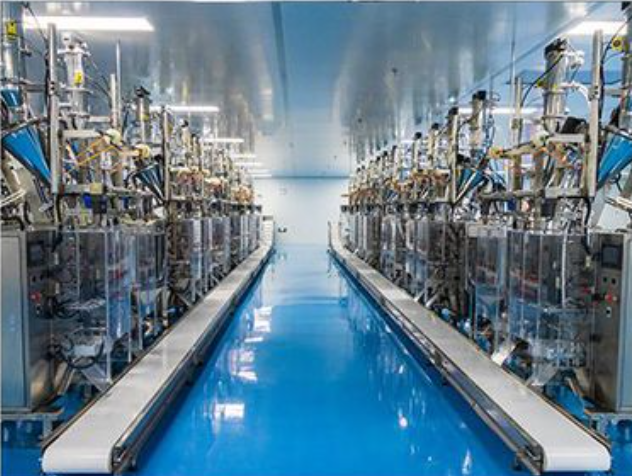
The 2 g sachet unit is the reason this format translates cleanly into a solid beverage line, and the reason it is worth specifying deliberately.
- One sachet equals one serving. The brand can state a per-serving proposition instead of a per-100 g proposition, which is how consumers and trade buyers compare products on a shelf.
- The sachet acts as a moisture barrier. The probiotic dose stays sealed until the moment of use, which removes the packaging variable from the stability discussion.
- The 40 g box equals 20 servings. Shelf presence and unit economics can be planned at box level rather than at bulk-weight level.
- The format drops into existing powder operations. A brand already running a solid beverage line can add a probiotic SKU without standing up a separate blending environment.
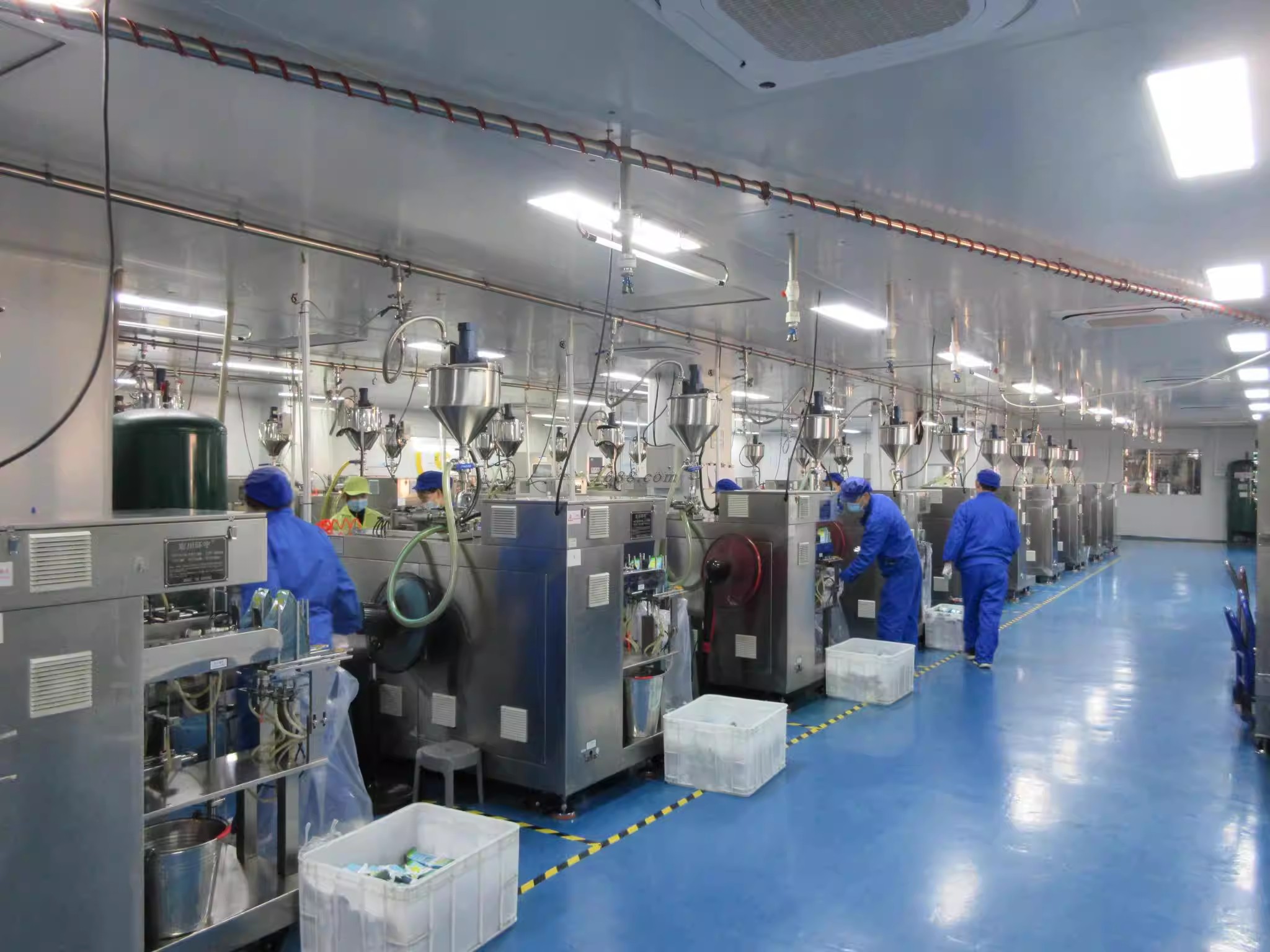
The supply side of that format is where the qualification decision actually happens. The format is supplied through Shenyang Songming Supply Chain Co., Ltd., a supply chain service provider specializing in the functional food and healthy beverage sector. The company operates a facility above 2,000 square meters, has 101–200 employees, and reports an annual output of 120,000 units. The operating facts a buyer can request evidence for are specific rather than generic:
- 100% traceability across all product categories
- 99.8% quality pass rate
- 98% on-time order delivery rate
- Product selection overseen by a PhD-led team, supported by 25 engineers in the R&D function
- Flavor profiles curated by a panel of professors
- Small-batch trial orders starting from 30 units
- Export share of 51%–60%, with main markets in North America, Eastern Asia, Western Europe and the Middle East
For a solid beverage manufacturer, these facts convert into four procurement outcomes. Traceability makes batch-level qualification possible. The quality pass rate sets an expectation for incoming reject rates and rework. The R&D headcount determines whether formulation questions are answered by the supplier or pushed back to the buyer. The 30-unit trial entry point determines whether a validation run is affordable at all.
One framing point is worth stating plainly: the same lyophilization and dry-fill platform that supports premium freeze-dried long shelf life meals also supports probiotic powder formats for solid beverage lines. The difference between the two applications is the fill unit and the serving format, not the underlying dehydration requirement.
Seven Steps to Add Freeze-Dried Probiotic Powder to a Solid Beverage Line
Step 1 — Specify the format before the formula
Work backwards from the serving. A 2 g sachet is the dose unit, and 20 sachets make the 40 g retail box. Locking that configuration first prevents later changes to sachet weight, box count and outer carton dimensions — changes that cascade into artwork, barcode registration and retailer listing data.
Step 2 — Test compatibility inside your own dry blend
The probiotic fraction will sit alongside acids, sugars, flavors and fibers that each have their own moisture behaviour. Confirm how the freeze-dried powder behaves in your specific blend, at your filling-room humidity, on your filling equipment. A supplier's reference data is a starting point; your own trial is the qualification.
Step 3 — Qualify documentation before the first invoice
Request batch-level traceability and complete food operation qualifications up front. Traceability at 100% across product categories is the standard to ask for. If a supplier cannot produce batch records on request, the ingredient will not clear an internal quality gate regardless of trial performance.
Step 4 — Validate with a small-batch trial from 30 units
Small-batch trial orders from 30 units exist precisely for this stage. Thirty units is enough to run a line trial, check sachet seal integrity in your own packaging format, place a limited consumer or trade test, and stress the powder under your real storage conditions — before any production-volume commitment is made.
Step 5 — Align the shelf-life claim with the target market's date rules
Shelf-life dating is a market-access question, not just a technical one. For the US retail and food service segments, the FDA Food Code 2026 Edition updates how "Best if Used By" and safety dates are implemented. If your launch market has a defined date convention, the label and the stability rationale have to be built together.
Step 6 — Scale the run with technical support in the loop
Scaling is where formulation questions reappear at larger batch sizes. Working with a supplier whose product selection is overseen by a PhD-led team and whose R&D function includes 25 engineers keeps those questions inside the supply relationship instead of inside your own lab queue.
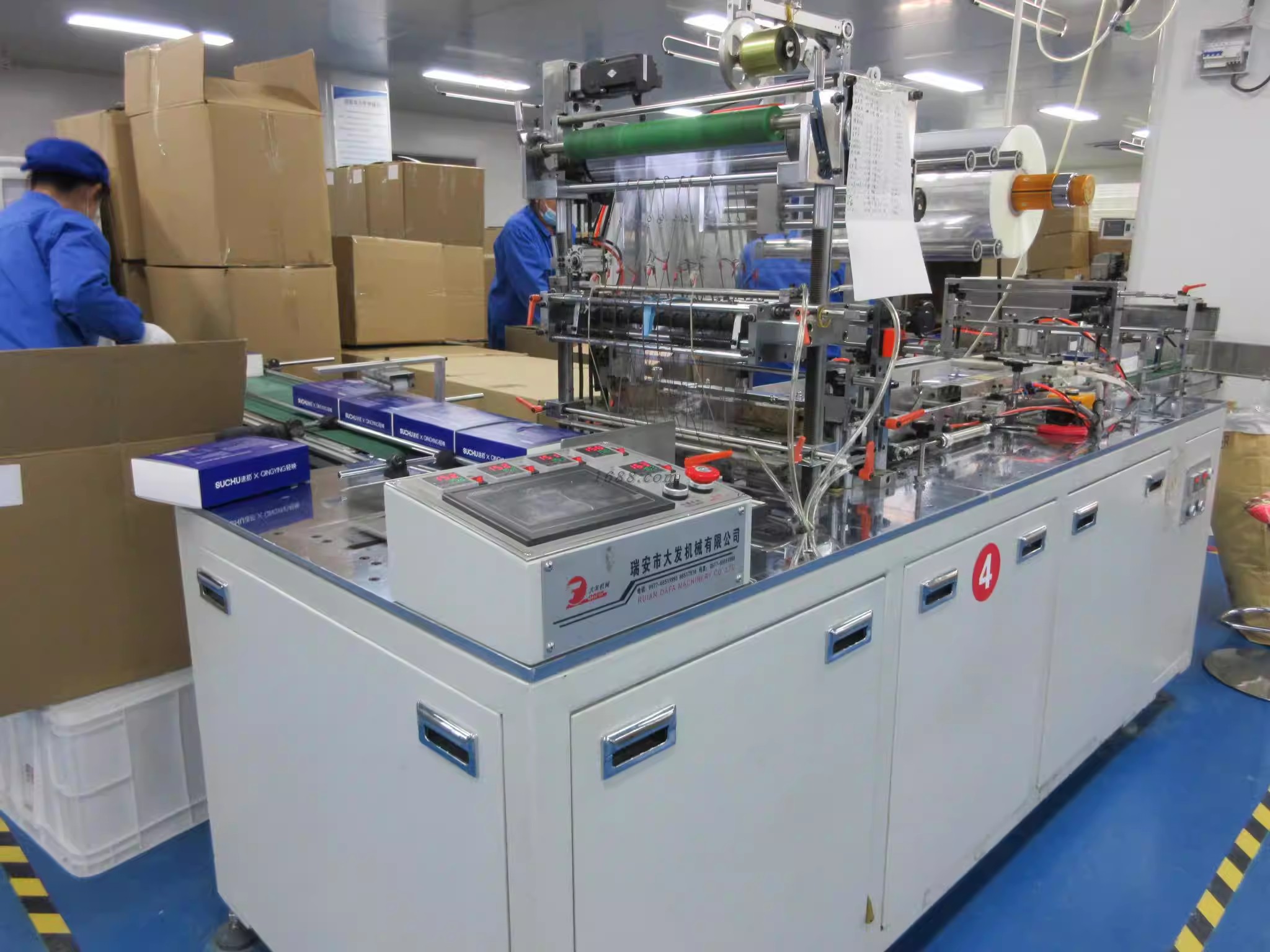
Step 7 — Lock in delivery and distribution before launch
Delivery reliability is the step that most often damages a beverage launch, because a delayed ingredient stops a filling line rather than simply disappointing a customer. A 98% on-time order delivery rate is the operational figure to ask about, and a supply chain positioned inside a Pilot Free Trade Zone adds a measurable logistics advantage — the reported 30% increase in cargo turnover efficiency. Distribution coverage should also be checked against where you actually sell: 30% Japan, 30% United States, 20% Saudi Arabia and 20% Germany is the reported split of the supply network.
Four Solid Beverage Scenarios This Format Fits
A beverage brand launching a single-serve probiotic stick line. The 20 x 2 g box gives a manufacturer a defined serving, a defined count and a defined retail unit from day one, without engineering a dosing system.
A meal-replacement or functional powder brand adding a probiotic SKU. An existing dry-blend operation can extend its range without building new delivery capability, because the sachet format carries the dose rather than the bulk canister.
A long shelf life meal program adding a companion drink. Premium freeze-dried long shelf life meals and long storage ready meals are bought as complete kit solutions. A sealed 2 g sachet fits that kit logic and carries the same ambient-storage expectation as the meal component.
A distributor or private-label operator building an own-brand box. Because trial entry starts at 30 units, a distributor can evaluate an own-brand 40 g box, test retail response, and only then move to volume — a sequence that protects cash flow and shelf space simultaneously.
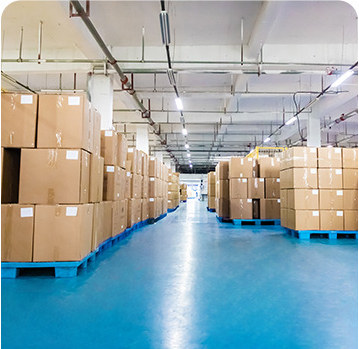
What Buyers Rank First: Five Criteria in a 2026 Sourcing Decision
When solid beverage manufacturers compare freeze-dried probiotic powder options, the deciding factors are rarely the headline claim. In practice, five criteria carry the most weight, and they rank in roughly this order.
- Traceability at batch level. Without it, nothing downstream can be qualified. 100% traceability across product categories is the benchmark to hold suppliers to.
- Quality yield. A 99.8% quality pass rate is a commercial number as much as a technical one — it shapes incoming inspection cost, rework and the risk of a launch-delaying rejection.
- Delivery reliability. A 98% on-time delivery rate protects the filling schedule. A supplier without that discipline transfers schedule risk to the buyer.
- Technical depth. A PhD-led product selection process and a 25-engineer R&D function determine whether formulation problems get solved inside the supply relationship.
- A trial-friendly entry point. Trial orders from 30 units determine whether validation is economically possible before volume commitment.
Notably absent from that ranking is packaging aesthetics or brand recognition. For a B2B dry-blend ingredient, the qualification path is evidence-driven, and the criteria above are the ones that survive contact with a quality department.
Requirement-to-Capability Comparison
The table below maps the requirements a solid beverage manufacturer brings to a freeze-dried probiotic supplier against verified capability facts, and states what each fact means operationally.
| Buyer requirement | Verified capability fact | What it means for your line |
|---|---|---|
| Batch-level traceability for quality qualification | 100% traceability across all product categories | Ingredient can be presented to internal quality teams with batch documentation, not just a certificate of analysis |
| Predictable incoming quality | 99.8% quality pass rate | Lower inspection exposure and rework risk against a stated yield baseline |
| Schedule protection | 98% on-time order delivery rate | Filling schedules can be planned against a stated delivery performance figure |
| Formulation support | PhD-led product selection; 25 engineers in R&D; flavor profiles curated by a panel of professors | Blend compatibility and taste questions are handled within the supply relationship |
| Low-risk pilot before volume | Small-batch trial orders from 30 units | Line trials and limited market tests can run before a production commitment |
| Logistics responsiveness | Pilot Free Trade Zone location; 30% increase in cargo turnover efficiency | Faster turnover reduces the working-capital time an order spends in transit |
| Market-appropriate supply coverage | Main markets North America, Eastern Asia, Western Europe, Middle East; distribution split 30% Japan, 30% US, 20% Saudi Arabia, 20% Germany | Supply experience exists in the regions where the finished product is likely to be sold |
| Format reference | Specification |
|---|---|
| Product format | SPACELIFE Probiotic freeze-dried powder-1 |
| Retail box | 40 g box |
| Sachet configuration | 20 x 2 g sachets |
| Application | Solid beverage and dry-blend powder lines |
| Trial entry point | Small-batch trial orders from 30 units |
FAQ: Sourcing Freeze-Dried Probiotic Powder for Solid Beverage Lines
What compliance evidence should a buyer request before adding freeze-dried probiotic powder to a solid beverage line?
Request batch-level traceability and complete food operation qualifications before the first production order. Traceability across all product categories is the working benchmark, because it is what allows a manufacturer's quality team to qualify an incoming ingredient rather than trust a marketing claim. Shelf-life dating rules should also be confirmed by market: the FDA Food Code 2026 Edition updates how "Best if Used By" and safety dates are implemented in the US retail and food service segments, so the label convention and the stability rationale need to be built together.
Can the supplier support formulation work, or only supply powder?
Formulation support is part of the offering rather than an exception. Product selection is overseen by a PhD-led team, the R&D function includes 25 engineers, and flavor profiles are curated by a panel of professors. For a solid beverage line this matters because the probiotic fraction has to be positioned inside a multi-ingredient dry blend, where moisture behaviour, particle size and taste all interact with ingredients the buyer already uses.
What is the minimum order for a first order?
Small-batch trial orders start from 30 units. That entry point is deliberately set below production volume so a manufacturer can run a line trial, verify sachet seal performance in its own packaging format, and conduct a limited market test before committing to a full run. The reference format tied to that entry point is the 40 g box containing 20 x 2 g sachets of SPACELIFE Probiotic freeze-dried powder-1.
Can samples or a trial batch be requested before a production order?
Yes — the trial path starts at 30 units, which is intended for validation rather than commercial resale. Buyers evaluating the format for a solid beverage line can contact the supply team directly to arrange a trial batch and discuss the intended blend, the target market and the shelf-life claim. Email songmingsonia@outlook.com or call +86 139-4018-4310 (also available on WhatsApp) to start that conversation.
How reliable is delivery once an order is confirmed?
The reported on-time order delivery rate is 98%, and the operation is located inside a Pilot Free Trade Zone, which has increased cargo turnover efficiency by 30%. Main markets are North America, Eastern Asia, Western Europe and the Middle East, and the reported supply network distribution is 30% Japan, 30% United States, 20% Saudi Arabia and 20% Germany. For a manufacturer planning a launch window, those figures are the ones to plan a filling schedule against.
Conclusion: Turning a Format Decision into a Validated Line
Adding a freeze-dried probiotic SKU to a solid beverage line is not primarily a branding decision. It is a sequence: specify the fill unit, test the powder inside your own blend, qualify the documentation, validate at small scale, align the shelf-life claim with your market's date rules, then scale with technical support attached. The SPACELIFE Probiotic freeze-dried powder-1 format — a 40 g box of 20 x 2 g sachets — is designed to be evaluated inside that sequence rather than outside it, and the trial entry point of 30 units makes the first step affordable enough to actually take.
Request a trial batch or a quote
SPACELIFE freeze-dried formats are supplied through Shenyang Songming Supply Chain Co., Ltd., a supply chain service provider for the functional food and healthy beverage sector. Trial orders start from 30 units, with 100% traceability, a 99.8% quality pass rate and a 98% on-time delivery rate behind every order.
Website: songming-sc.com
Email: songmingsonia@outlook.com
Tel / WhatsApp: +86 139-4018-4310
Have Questions or Need More Details?
Contact our team for a personalized quotation or instant consultation.
Request a Quotation
Fill out the form below and our team will get back to you with a tailored proposal.
WhatsApp Direct Chat
Prefer to chat in real-time? Message us on WhatsApp for instant assistance & quick answers.
- Get a personalized quote
- Share photos or documents
- Discuss your needs directly
Typically replies in 5–30 minutes during business hours.