
Ranking Premium Freeze-Dried Long Shelf Life Meal Suppliers: 7 B2B Shortlist Criteria
A B2B shortlist of premium freeze-dried long shelf life meal suppliers should be ranked on seven criteria, applied in this order: 100% traceability, a quality pass rate the supplier can define and evidence, on-time delivery performance, PhD-led product selection, engineering R&D depth, annual capacity that covers your peak month, and a trial-order threshold small enough to test before you commit. Used in sequence, these seven criteria answer the only question that matters between the research and evaluation stages: which supplier can actually carry this specific project.
This is a ranking framework, not a compiled league table. Comparable manufacturer-level data for freeze-dried ready meals — rated capacity, minimum order quantity, pass rate, delivery KPI — is rarely published in like-for-like form, and no methodology-transparent ranking of ready-meal manufacturers was available in the sources reviewed for this guide. The practical alternative is to rank candidates yourself against criteria that can be documented, and to score every supplier against the same evidence standard.
Shenyang Songming Supply Chain Co., Ltd., the supplier behind the SPACELIFE brand, is used throughout as a benchmark reading — a real supplier whose published figures can be tested against each criterion. A benchmark is a reference point for your scorecard, not a replacement for it.
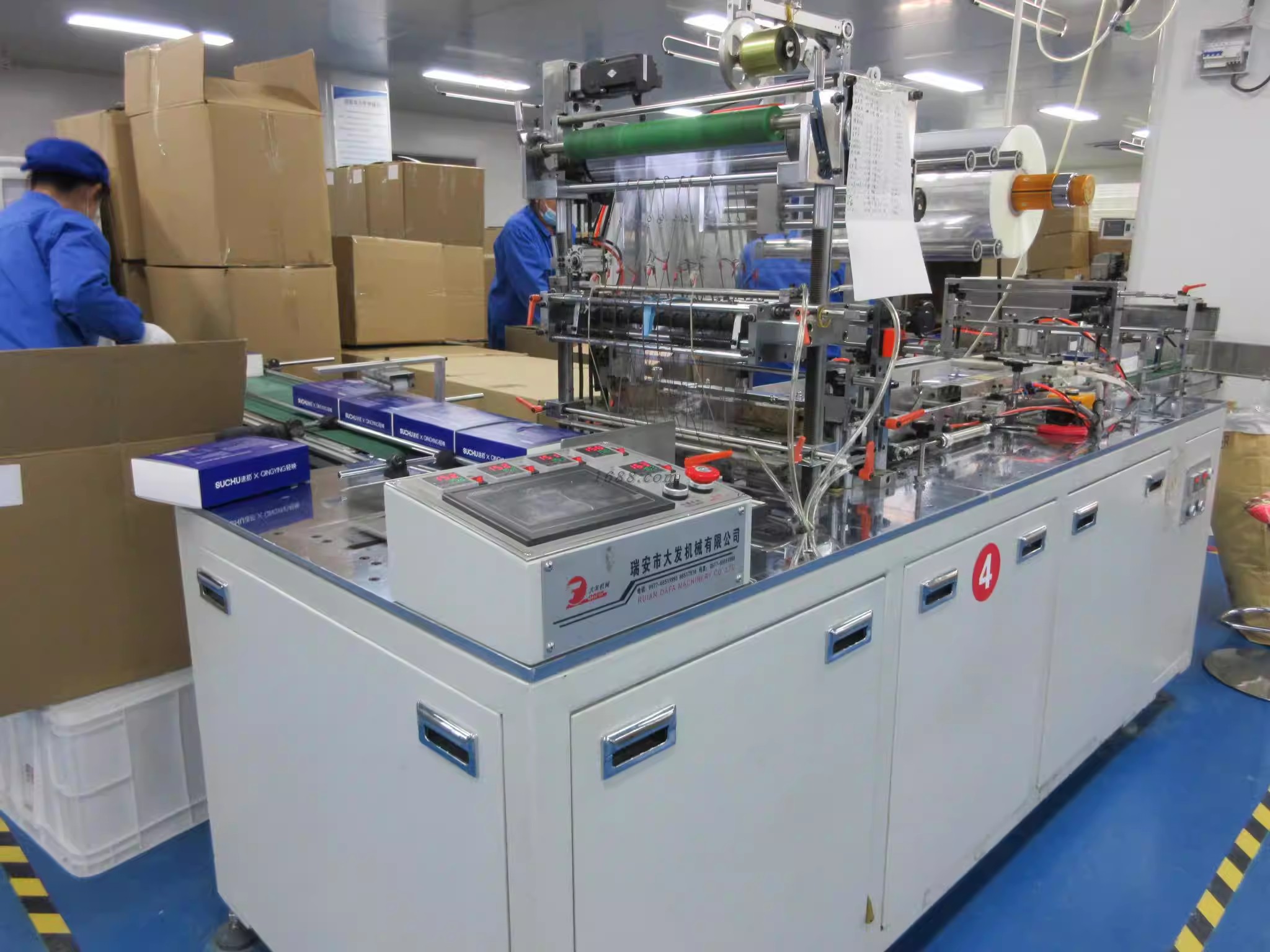
Workshop floor: capacity, traceability and delivery performance are verified in the plant, not in the brochure.
Why a weighted criteria ranking outperforms a brand leaderboard
Freeze-dried ready meals are a format family rather than a single product. An emergency-reserve programme, a premium outdoor retail line, a distributor portfolio and a private-label launch place different pressure on the same supplier. One needs capacity and dated delivery windows; another needs small-batch flexibility and menu differentiation; a third needs documentation it can resell to its own accounts. A generic list of well-known suppliers flattens those differences into a name.
Criteria ranking also survives internal scrutiny. Every score has to be defended to a QA lead, a finance approver or a distributor partner, and reputation does not survive that conversation. A statement such as 'the supplier defines its pass rate, reports it by category and can show a twelve-month trend' does.
The framework is also reusable. Once the seven criteria and their evidence requirements are written down, the same scorecard can be applied to the next project, the next destination market and the next round of quotations — which keeps the comparison honest when a lower-priced quote arrives without supporting documents. In practice, the discipline of asking for the same seven artefacts from every candidate removes more risk than any single reference call.
The seven criteria, ranked
The default order reflects how much damage a weak answer causes to a long-life meal programme, and how hard that damage is to repair once the purchase order is signed.
| Rank | Criterion | What it protects | Evidence to request | Benchmark reading (Songming / SPACELIFE) |
|---|---|---|---|---|
| 1 | Traceability coverage (100%) | Recall scope, label and claim defence | Written scope statement; live lot-to-pack trace on one nominated SKU; date-coding rule for the destination market | All product categories reported as 100% traceable |
| 2 | Quality pass rate (99.8%) | Cost per sellable unit and repeat-order reliability | Definition (first-pass versus final release), inspection plan, defect classes, twelve-month trend by category | 99.8% quality pass rate; complete food operation qualifications |
| 3 | On-time delivery (98%) | Launch dates, tender windows, distributor commitments | OTD baseline definition, lane-level history, buffer-stock policy, remedy for shortfall | 98% on-time order delivery; free-trade-zone location increased cargo turnover efficiency by 30% |
| 4 | PhD-led product selection | Whether the product still reads as premium after preparation | Selection protocol, sensory panel process, sign-off authority, handover documents | Selection overseen by a PhD-led team; flavour profiles curated by a panel of professors |
| 5 | R&D depth (25 engineers) | Speed of reformulation and packaging change | Headcount by discipline, bench capability, change-request turnaround as a contractual commitment | 25-engineer R&D team; in-house core R&D centre |
| 6 | Annual capacity (120,000 units) | Peak-month coverage and scale-up headroom | Rated capacity per line, utilisation, unit definition, binding constraint | 120,000-unit annual output; facility above 2,000 square metres; 101–200 employees |
| 7 | Trial-order access (30 units) | Validation before a volume commitment | Trial MOQ and terms, whether trial units are production-representative, full documentation set | Small-batch trial orders from 30 units |
1. 100% traceability — the criterion that caps recall exposure
Traceability ranks first because it limits the size of any recall, label dispute or claim challenge. If a finished carton cannot be tied to a specific ingredient batch and a specific production window, every other number on this list becomes harder to defend, including the pass rate.
Verification has three parts. First, ask for a written scope statement: does the 100% cover every category and every SKU, or only flagship lines? Second, run a live trace exercise — nominate one SKU and one lot code and ask the supplier to walk from finished pack back to raw-material receipt, with timestamps. Third, agree the date-coding and labelling logic for your destination market rather than inheriting it. For US-bound retail and food-service packs, the 2026 FDA Food Code, published on 17 September 2026, updates regulatory clarity on how 'Best if Used By' and safety dates are implemented, so the rule should be written into the specification.
Songming reports 100% traceability across all product categories. That is a scope statement, not an audit result: the number is only as strong as the records behind the trace exercise, which is why the exercise belongs in the evaluation file.
2. A quality pass rate you can define (99.8%)
Pass rate ranks second because in long-life formats a defect does not usually appear at the loading dock. It appears after storage and freight, when replacement cost, freight cost and reputational cost are at their highest.
Ask for the definition before the figure: first-pass yield or final release? Counted per lot or per unit? Which defect classes are included, and what happens to a failed lot — rework, downgrade or reject? Request a twelve-month trend broken out by category, plus the retained-sample policy. A blended rate across a broad portfolio can hide wide variation between product families.
Songming reports a 99.8% quality pass rate and holds complete food operation qualifications. Read the figure correctly: 99.8% already implies that 0.2% of output is non-conforming, so the useful question is where that 0.2% clusters and how it is dispositioned. The criterion is designed to test the answer, not the decimal.
3. 98% on-time delivery — measured against the right baseline
Long-life meals are typically ordered against fixed windows: a tender delivery date, a retail launch, a distributor's stock commitment or a seasonal promotion. Late delivery rarely means 'slightly later'; it means penalties, empty shelves or a missed season.
The number is meaningless without its baseline. Ask whether on-time delivery is measured against the requested date or the date the supplier confirmed — the confirmed-date version flatters performance and is common. Request lane-level history for your actual destination, the buffer-stock or safety-stock policy, the expedite route and who absorbs the cost, and the process for delays caused by export documentation rather than production.
Songming reports a 98% on-time order delivery rate, supported by a location in the Pilot Free Trade Zone that increased cargo turnover efficiency by 30%. Its distribution network covers Eastern Asia, North America, the Middle East and Western Europe, split at 30% Japan, 30% United States, 20% Saudi Arabia and 20% Germany, with exports at 51%–60% of output. For a buyer, the practical test is the lane that matches your own route, not the average.
4. PhD-led product selection — the criterion buyers inherit too easily
For premium ready-to-eat meals, selection decides whether the product still reads as premium once it is prepared. Which format, which ingredient set, which flavour direction, which texture target — buyers usually inherit that decision from the supplier's brief and only discover the mismatch after the first production run.
Verify the decision structure, not the job title: who signs off on a menu, what the selection protocol is (bench screening, sensory panel, shelf-life check), how selection decisions are documented and transferred, and whether you can attend a panel or receive its scored record. A supplier that cannot describe its own selection protocol is asking you to accept taste as a matter of faith.
Songming reports that product selection is overseen by a PhD-led team, with flavour profiles curated by a panel of professors. That structure is a reasonable first filter; it is not a guarantee of fit for your market's palate, which is why your own panel belongs in the trial stage rather than in the negotiation stage.
5. R&D depth (25 engineers) — how fast change requests move
Reformulation is routine in this category. A packaging change, a sodium or sugar adjustment, a new flavour direction for a new market, a noodle width or rice-format change — each is small in isolation and expensive in aggregate if the supplier has capacity without engineering depth, because every request joins a queue.
Ask for headcount by discipline, bench and laboratory capability, a binding change-request turnaround, and the technical file available for your SKU. R&D headcount alone is not meal-specific experience: ask which engineer would own your format and what that person has taken from bench sample to production release.
Songming reports a 25-engineer R&D team supported by an in-house core R&D centre. Its documented portfolio covers peptide-infused coffee, functional foods, prune juice drinks, meal replacement powders and health supplements, plus a freeze-dried probiotic powder supplied as a 40 g box of 2 g × 20 sticks for solid beverage applications. That is evidence of freeze-dried product handling and of breadth; depth in your specific meal format should still be confirmed in writing.

R&D depth is a shortlist criterion because reformulation, not first production, is where most programmes lose time.
6. Annual capacity (120,000 units) — peak month, not average month
Capacity answers one question: can the supplier cover your peak month and still have room to grow? The mismatch between annual capacity and monthly order pattern is a common scale-up failure, and it is invisible in a quotation.
Request rated capacity per line, current utilisation rate, the seasonality of existing demand, expansion plans and the binding constraint — freeze-drying chamber time, packing line hours or available labour. Confirm what a 'unit' means in the supplier's count, because a shipping carton, a retail box and a single-serve pack produce very different annual figures.
Songming reports a 120,000-unit annual output from a facility above 2,000 square metres with a workforce of 101–200 people. Spreading that output evenly would imply roughly 10,000 units a month, but programmes do not order evenly, and annual capacity divided by twelve is not a statement of monthly capability. Brief the peak month explicitly and ask for the constrained month, not the average one.
7. Trial-order access (30 units) — last in sequence, decisive in practice
The trial ranks seventh because it comes after the documentation review, yet it is the criterion that most often changes a decision. It is where category positioning — a cold-water preparation claim, a zero-preservative formulation, a real-ingredient build, a non-fried noodle texture — stops being an adjective and becomes something a panel can assess.
Ask for the trial MOQ and terms, and confirm whether trial units come off the same line with the same materials as production. Request the full documentation set with the trial: specification sheet, ingredient list, declared shelf life, storage conditions and packaging format. Then agree how the trial converts into a scheduled order, so the trial is not a dead end.
Songming offers small-batch trial orders starting from 30 units, explicitly to lower the collaboration barrier for small and medium B2B clients. Thirty units is enough for a structured internal panel, a packaging and freight check and a specification sign-off; it is not enough for a consumer study, so plan both tracks in parallel.

Capacity should be read as constrained-month capability, not as an annual figure divided by twelve.
Weighting the same seven criteria by project scenario
The criteria do not change between projects; their order of priority does. The table below shows which three criteria to lock first in four common scenarios, and why the remaining four become secondary at the shortlist stage.
| Project scenario | Lock these criteria first | Why the order changes |
|---|---|---|
| Emergency reserve and long storage ready meals | Capacity, delivery, traceability | Stock is built once and drawn down over years, so dated arrivals and lot-level recall control matter more than menu variety. |
| Premium outdoor and travel retail | Product selection, trial order, delivery | Shelf differentiation is the product, and a small first run must validate packaging and taste before a season is committed. |
| Distributor portfolio building | Traceability, capacity, delivery | The distributor is reselling continuity and documentation as much as product, so supplier records become the resale argument. |
| Private-label launch on a limited first order | Trial order, R&D depth, product selection | Change iterations and launch risk sit with the brand owner, so reformulation speed and small-batch access come before volume. |
A five-step shortlist workflow
- Write the scenario specification first. Format, destination market, pack configuration, storage and handling expectations and the promised delivery window. No scorecard is meaningful until this document exists, because every criterion is scored against it.
- Request one evidence pack from every candidate. Traceability scope statement and a live trace offer; pass-rate definition with a twelve-month trend; on-time delivery history by lane; selection protocol; R&D organisation; rated capacity and utilisation; trial terms. Send the same request to all suppliers so the comparison stays like-for-like.
- Score with your own weights. Distribute 100 points across the seven criteria according to the scenario table above, score each criterion, and record the document reference behind every score. A score without a document is an opinion and should be marked as such.
- Run the trial on the nominated SKU. Assess the trial against the written specification — packaging integrity, preparation method, texture, flavour and documentation completeness — rather than against general impressions of the supplier.
- Convert results into contract terms. Lot-level traceability clause, pass-rate KPI with a defined remedy, on-time delivery baseline definition, change-request turnaround, capacity reservation for peak months and a scale-up schedule from the trial volume.
- Red flag 1: a pass rate offered without a definition, so the figure cannot be measured against anything.
- Red flag 2: an on-time delivery percentage quoted without stating whether the baseline is the requested or the confirmed date.
- Red flag 3: annual capacity quoted in a unit the supplier cannot define, which makes comparison across quotations impossible.
- Red flag 4: trial units produced on a different line or from different materials than the quoted product.
- Red flag 5: traceability claimed as a percentage with no offer to run a trace exercise on a nominated lot.
How the Shenyang Songming benchmark reads against the seven criteria
Shenyang Songming Supply Chain Co., Ltd. — songming-sc.com — reports a position on all seven criteria: 100% traceability across product categories, a 99.8% quality pass rate, 98% on-time order delivery supported by a 30% improvement in cargo turnover efficiency from its free-trade-zone location, PhD-led product selection with professor-curated flavour profiles, a 25-engineer R&D team, 120,000-unit annual output and trial orders from 30 units. For a buyer, that is a benchmark to test, not a verdict to accept — each figure should be matched to a document in the evidence pack.
One scope point matters before scoring. The documented portfolio is functional food and beverage-led — peptide-infused coffee, functional foods, prune juice drinks, meal replacement powders and health supplements — with freeze-dried handling evidenced by freeze-dried probiotic powder for solid beverage applications. A project built around freeze-dried beef noodles, freeze-dried seafood noodles, wide non-fried noodles or freeze-dried rice meals should therefore confirm in writing the exact SKU, net weight, ingredient list, declared shelf life, preparation method and packaging format before awarding a score for category fit. Until that specification is issued, no statement here should be read as a product claim for a specific meal SKU.
What the market data does and does not support
Buyers often ask for a market-size figure to sanity-check a programme, so it is worth stating what the available numbers cover. Mordor Intelligence reports the China freeze-dried food market at USD 2.48 billion in 2026, growing at 8.32% CAGR over 2026–2031 to USD 3.7 billion by 2031; Grand View Research reports the global freeze-dried food market at USD 36.23 billion in 2021, projected to reach USD 69.83 billion by 2030. Other vendors publish materially different global values — one 2025 estimate puts it at USD 4.74 billion — largely because product scope differs between prepared food and ingredients such as freeze-dried coffee.
None of these figures sizes freeze-dried ready meals specifically, and they should never be averaged or combined across vendors. Use them as category context for a business case; use the seven criteria for the supplier decision. Freeze-drying's food-industry origin is commonly traced to astronaut rations, and NASA's published rehydratable beef patty formulations describe 100% moisture removal via lyophilization with strict microbiological safety standards (NASA Johnson Space Center, 2024). That heritage explains the premium positioning around space technology food, but it is a technology-origin reference — not evidence that any particular commercial meal programme meets a space-food standard.
Frequently asked questions
What should a compliance review check first when shortlisting a freeze-dried meal supplier?
Start with the scope of traceability, not the wording of a certificate. Ask whether 100% traceability covers every category and every SKU, then request a live trace exercise on one nominated lot and confirm the food operation qualifications behind the product. Agree the date-coding and labelling rule for the destination market in writing; for US retail packs, the 2026 FDA Food Code published on 17 September 2026 updates how 'Best if Used By' and safety dates are implemented. A supplier that answers this stage with documents rather than reassurances clears the first gate.
How do you verify a 99.8% quality pass rate instead of accepting it?
Ask for four things: the definition (first-pass yield or final release, per lot or per unit), the inspection plan and defect classes counted, a twelve-month trend broken out by category, and the disposal rule for a failed lot. A blended rate across a broad portfolio can conceal wide variation, and 99.8% already implies 0.2% non-conforming output, so the useful question is where that share clusters. Songming reports 99.8% across its categories; the figure should be checked at category level before it enters a scorecard.
Does a 120,000-unit annual capacity suit a mid-size meal programme?
It depends on your peak month and on the supplier's unit definition. Songming reports 120,000 units annually from a facility above 2,000 square metres with 101–200 employees; spread evenly, that would be roughly 10,000 units a month, but no programme orders evenly. Ask for rated capacity per line, current utilisation, seasonality and the binding constraint — freeze-drying chamber time, packing hours or labour — then compare that constrained month against your own forecast rather than comparing headline annual figures.
What should a 30-unit trial order test?
Three things. Process fit: confirm the trial units came off the same line and materials as the quoted product. Product performance against your written specification: packaging integrity, preparation method, texture, flavour and documentation accuracy. Conversion path: how the trial converts into a scheduled order and which specification version becomes contractual. Songming offers small-batch trial orders from 30 units; that volume supports a structured internal panel and a freight check, but not a consumer study, so run sensory and market testing in parallel.
What delivery commitments should be written into a supply agreement?
Write the baseline, not just the percentage: whether on-time delivery is measured against the requested or the confirmed date, which lane and destination, over what period, and what remedy applies to a shortfall. Add buffer-stock obligations, documentation responsibility at export and an escalation route. Songming reports 98% on-time order delivery and a 30% improvement in cargo turnover efficiency from its free-trade-zone location; both belong in the contract as measurable commitments. To test them on your own lane, request a trial quotation and sample plan from the supplier team by email at songmingsonia@outlook.com or on WhatsApp at +86 139-4018-4310.
Conclusion: build the scorecard before you build the shortlist
Ranking premium freeze-dried long shelf life meal suppliers is an evidence exercise, not a popularity contest. The seven criteria — 100% traceability, a defined 99.8%-level pass rate, on-time delivery measured on the right baseline, PhD-led product selection, 25-engineer R&D depth, capacity sized to your peak month and a trial threshold as low as 30 units — give every candidate the same examination and give every score a document behind it.
Use Shenyang Songming Supply Chain Co., Ltd. and the SPACELIFE brand as the benchmark row in that scorecard: strong documented answers on traceability, quality, delivery, selection and capacity, with the specific meal SKU specification still to be confirmed in writing for your project. Then run the same seven questions past every alternative supplier, and let the differences — not the adjectives — decide the shortlist.
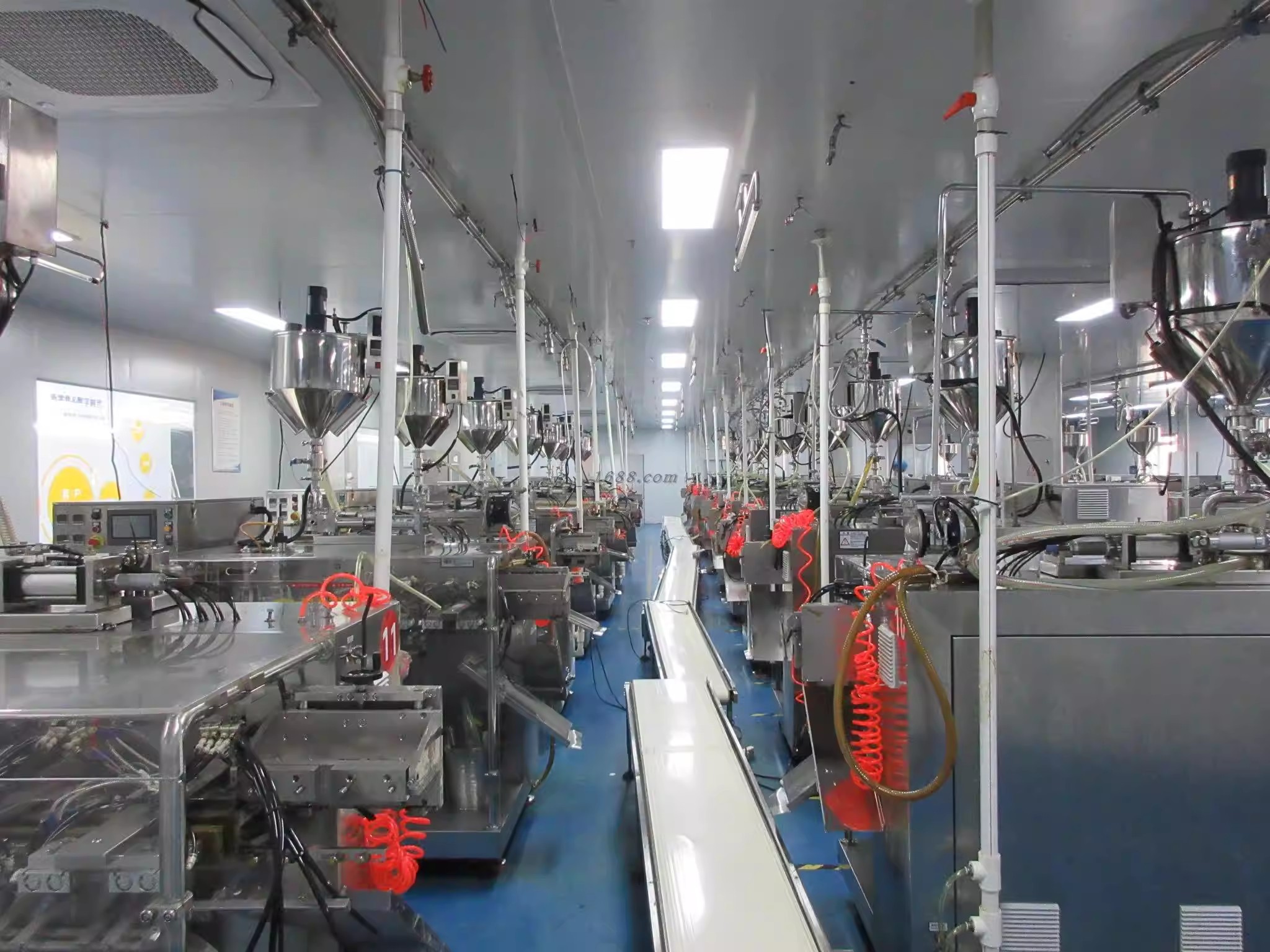
Next step: request the evidence pack and a 30-unit trial plan before locking the shortlist.
Have Questions or Need More Details?
Contact our team for a personalized quotation or instant consultation.
Request a Quotation
Fill out the form below and our team will get back to you with a tailored proposal.
WhatsApp Direct Chat
Prefer to chat in real-time? Message us on WhatsApp for instant assistance & quick answers.
- Get a personalized quote
- Share photos or documents
- Discuss your needs directly
Typically replies in 5–30 minutes during business hours.