
Understanding Lyophilization: Key Process Parameters for Stable Probiotic Powders
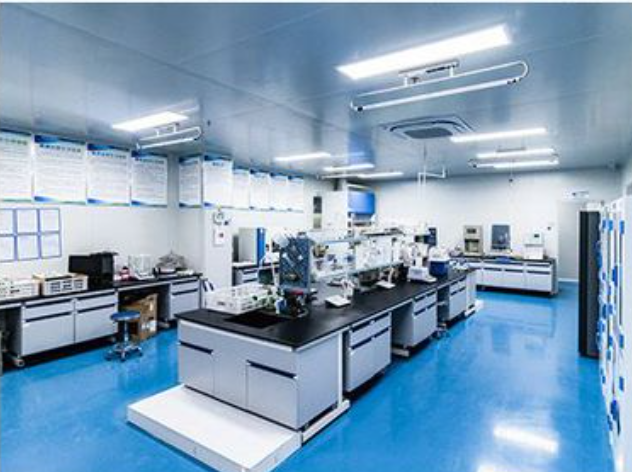
Freeze-drying cycles for probiotic powders are established and verified in the R&D center before they are transferred to production.
Lyophilization, commonly called freeze-drying, is the dehydration route used when a live microbial culture has to survive both the drying step itself and a long ambient shelf life. Instead of evaporating water with heat, the process freezes the formulation and then removes the ice by sublimation under reduced pressure, so the product is never exposed to the temperature range that inactivates probiotic cells.
The parameters that decide whether a finished powder still meets its potency specification at the end of shelf life are specific and testable: the freezing setpoints relative to the formulation's critical temperatures, the cooling rate that shapes ice-crystal structure, chamber pressure and shelf temperature during primary drying, the secondary drying endpoint expressed as residual moisture and water activity, and the barrier packaging that holds that moisture state in place through distribution.
Probiotic freeze-dried powder-1 is a composite powder in freeze-dried form produced by SPACELIFE, the brand operated by Shenyang Songming Supply Chain Co., Ltd., a supply chain service provider specializing in functional food and healthy beverages. Its process and formulation choices are developed by a 25-engineer R&D team, with product selection overseen by a PhD-led group. This guide sets out the parameters behind that type of product for formulators, quality teams and procurement managers evaluating freeze-dried probiotic powder programs.
Why Probiotic Powders Are Difficult to Stabilize
A probiotic powder must satisfy three requirements simultaneously: the cells must remain viable, the material must be dry enough to be biologically stable at ambient temperature, and the powder must still disperse cleanly in cold water when it is used in a solid beverage. These requirements pull in different directions, and most of the technical difficulty in lyophilization comes from the trade-offs between them.
The degradation pathways that a freeze-drying cycle has to defend against are well documented in microbiology and pharmaceutical processing:
- Thermal inactivation. Sustained exposure to elevated temperature damages cell membranes and denatures intracellular proteins. This is the main reason drying methods that depend on heat remain a compromise for sensitive strains.
- Freezing damage. Ice crystals can physically rupture cell envelopes, and as ice forms the remaining solutes become more concentrated, exposing cells to osmotic stress.
- Oxidative damage. Oxygen contact during processing and storage attacks membrane lipids, reducing the number of cells that recover after reconstitution.
- Residual moisture. Water that stays bound in the powder supports hydrolysis, aggregation and browning-type reactions and raises water activity above the level at which the material is biologically stable.
- Packaging failure. A powder dried to a low moisture level but packed in a weak moisture barrier returns to a higher moisture level during distribution, and the shelf-life claim fails in the market rather than in the laboratory.
The practical consequence is that a freeze-drying cycle should be treated as a process window rather than a single fixed recipe. A cycle that dries harder and faster is not automatically better: aggressive primary drying can collapse the cake and damage cells, while a conservative cycle that leaves too much bound water shortens shelf life even if the powder looks and flows perfectly on release day.
For buyers, "stable" has a measurable meaning: the potency declared at release is still present at the declared expiry date under the declared storage conditions, dispersibility and flavour are unchanged, and no preservatives are needed to achieve that result. The clean-label expectation is now mainstream rather than niche. Published research indicates that 67% of consumers prefer products without added preservatives (Food Institute / DataM Intelligence, 2023), which places pressure on formulators to reach stability through process control instead of additives.
Industry Background: Why Low-Temperature Drying Keeps Expanding
The global freeze-dried food market was valued at approximately USD 41.8 billion in 2024 and is projected to reach USD 86.2 billion by 2034 (Market.us). Asia-Pacific accounted for 39.3% of that market in 2024 (Straits Research). Market size alone does not explain the growth in probiotic and functional-powder applications; the driver is that freeze-drying solves a formulation problem that heat-based drying cannot solve.
Three commercial trends point in the same direction. First, ambient distribution is replacing cold-chain distribution for many categories, because ambient logistics are simpler and reach markets where refrigerated storage is unreliable. Second, clean-label formulation removes the preservatives that would otherwise be used to compensate for residual moisture. Third, long shelf-life claims have become a purchasing criterion rather than a premium extra.
The same lyophilization platform that stabilizes probiotic powders also underpins adjacent ambient-stable categories, including premium freeze-dried long shelf life meals, premium emergency food and other ready-to-eat formats. Parameter knowledge developed for one product line therefore transfers to the next, and companies that operate the process in-house tend to accumulate a genuine technical advantage over time.
For procurement teams the implication is structural. Because viability is created by the cycle rather than by a single ingredient, supplier selection becomes largely a question of process capability: who defines the cycle, who documents it, who can reproduce it at production scale, and who can prove that the released powder behaves as specified after months of storage.
The Parameter Groups That Control Probiotic Viability
Freeze-drying parameters are easier to manage when they are grouped by the physical event they control. Five groups determine whether a probiotic powder remains viable and stable.
1. Formulation and the protectant system
Before any cycle is written, the liquid formulation determines how much protection the cells will have during freezing and drying. Lyoprotectants and cryoprotectants, typically sugars, polyols and protein- or milk-based carriers, replace part of the water shell around cell membranes and raise the temperature at which the frozen matrix can be dried without collapsing. The ratio of protectant to biomass, the total solids content and the fill depth all change the thermal behaviour of the product, and therefore change the cycle that will work. This is also the stage at which a composite powder is defined: which strains are included, which carriers and flavour components are used, and what the powder must do when it is reconstituted.
2. Freezing: critical temperatures and cooling rate
Freezing is not a holding step; it is the stage that either protects the cells or damages them. The formulation must be frozen below its critical temperatures, specifically the glass transition temperature of the maximally freeze-concentrated fraction and the collapse temperature above which the drying cake loses its structure, before vacuum is applied. The cooling rate then controls ice-crystal size and distribution. Slower freezing produces larger crystals and a more open structure that sublimates efficiently; faster freezing produces smaller crystals that tend to preserve cell integrity but can slow drying. An annealing hold is sometimes used to even out crystal size and improve batch-to-batch uniformity.
3. Primary drying: chamber pressure and shelf temperature
Primary drying removes free ice by sublimation, and it is controlled by two parameters that must be adjusted together: the shelf temperature that supplies heat, and the chamber pressure that governs how quickly water vapour leaves the product. The limiting variable is product temperature, which must remain below the collapse temperature throughout the step. Heat input that outruns sublimation raises product temperature and causes meltback or collapse. Pressure selection is a balance as well: higher pressure improves heat transfer but slows vapour removal, while very low pressure improves mass transfer but can starve the product of the heat it needs. Endpoint detection, using product thermocouples and comparative pressure measurement between gauge types, determines when sublimation is genuinely complete rather than when a cycle timer expires.
4. Secondary drying: residual moisture and water activity
Once the ice is gone, a fraction of water remains bound to the solids. Secondary drying raises the shelf temperature to desorb that bound water until the powder reaches a moisture level at which the remaining water cannot support degradation reactions. Residual moisture and water activity are the release-relevant measurements at this stage, and they are also the parameters most often under-specified in purchase agreements. Drying beyond the optimum does not keep improving stability and can introduce handling problems such as electrostatic behaviour and a brittle cake, while stopping short leaves enough water to accelerate potency loss in storage.
5. Post-dry protection: handling and packaging
Freeze-dried powder is hygroscopic, and the low moisture level achieved in the dryer is an unstable state that the surrounding environment will reverse. Unloading therefore has to happen in a controlled-humidity area, and the primary package must be a genuine moisture barrier, usually combined with oxygen control such as nitrogen flushing or an oxygen absorber. Packaging is not an afterthought to the cycle: a correctly dried powder in a weak barrier can reach the same moisture level as a poorly dried powder in a strong barrier, and both will fail the shelf-life claim.
| Parameter group | What it determines | Failure mode if out of range | Documentation to request |
|---|---|---|---|
| Protectant formulation | Cell protection during freezing and drying; matrix thermal behaviour | Low recovery after drying; poor cake structure | Formulation record; protectant-to-biomass ratio; solids content |
| Freezing setpoint | Whether the cake can be dried without collapsing | Collapse, meltback, structural loss | Critical temperature determination for the specific matrix |
| Cooling rate and annealing | Ice-crystal size, pore structure, drying rate | Uneven drying; batch-to-batch variation | Freezing profile; annealing step definition |
| Primary drying pressure and shelf temperature | Heat and mass transfer balance during sublimation | Incomplete sublimation; product overheating | Cycle recipe with pressure and temperature ramps |
| Product temperature control | Keeping the product below its collapse temperature | Structural damage; viability loss | In-process temperature records; endpoint detection method |
| Secondary drying endpoint | Bound water removal; biological stability | High residual moisture; shortened shelf life | Residual moisture and water activity results per batch |
| Unloading environment and packaging | Whether the dried state is maintained in storage | Moisture regain; caking; potency decline | Humidity control records; barrier specification; oxygen control |
Table 1: Lyophilization parameter groups for probiotic powders, the failure modes they control, and the documentation a buyer should request.
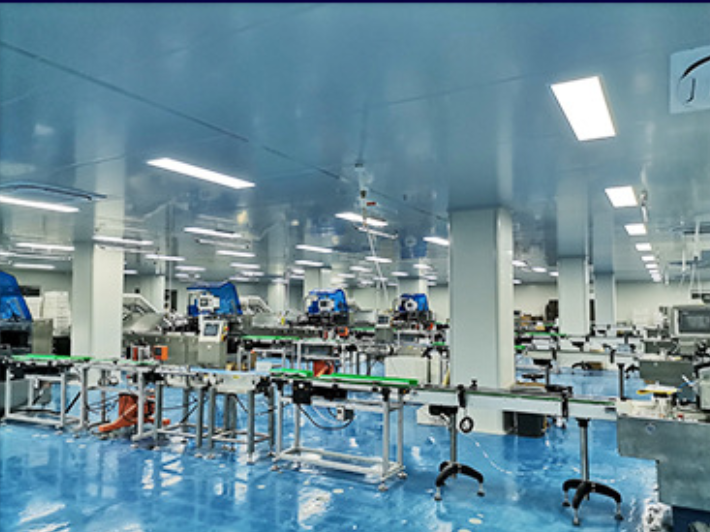
Cycle parameters are only meaningful if the production line can reproduce them consistently from batch to batch.
Step-by-Step Breakdown: How a Lyophilization Cycle Is Built
A freeze-drying cycle is not selected from a catalogue. It is developed for a specific matrix and then transferred, monitored and verified. The sequence below reflects how a technically complete development program is normally structured.
- Define the strain set and the finished-product target. The starting point is the potency that must remain at expiry, in which format the powder will be used, and under which storage and distribution conditions. Without these three inputs, no cycle can be judged correct or incorrect.
- Fix the composite matrix. Strains, protectants, carriers and flavour components are combined into a single composite powder. Every ingredient added at this stage changes the thermal behaviour of the batch and therefore the cycle that follows.
- Establish the critical temperatures. Thermal analysis of the actual matrix identifies the glass transition temperature of the maximally freeze-concentrated fraction and the collapse temperature. These values, not generic setpoints, set the boundaries for everything that follows.
- Set the freezing step. Cooling rate is chosen to balance cell integrity against drying speed, with an optional annealing hold to improve structure uniformity.
- Ramp primary drying. Shelf temperature and chamber pressure are programmed so that product temperature stays below the collapse temperature while sublimation proceeds at an economical rate.
- Determine the endpoint. Product thermocouples and comparative pressure measurement establish when sublimation is complete, which avoids both under-drying and unnecessary time under vacuum.
- Run secondary drying to the moisture target. The shelf temperature is raised to desorb bound water, and the result is verified by residual moisture and water activity rather than by cycle time alone.
- Unload, pack and release under a stability program. Unloading takes place under controlled humidity, the package is sealed with moisture and oxygen control, and the batch enters a stability program that tracks potency, moisture, dispersibility and sensory attributes against the declared shelf life.
The step that most often breaks between pilot and production is not the chemistry but heat and mass transfer at scale. Shelf spacing, radiative load and fill depth change the effective cycle, so a written transfer protocol and in-process monitoring matter as much as the original recipe. This is the point at which process capability, rather than formulation alone, becomes the deciding factor in supplier evaluation.
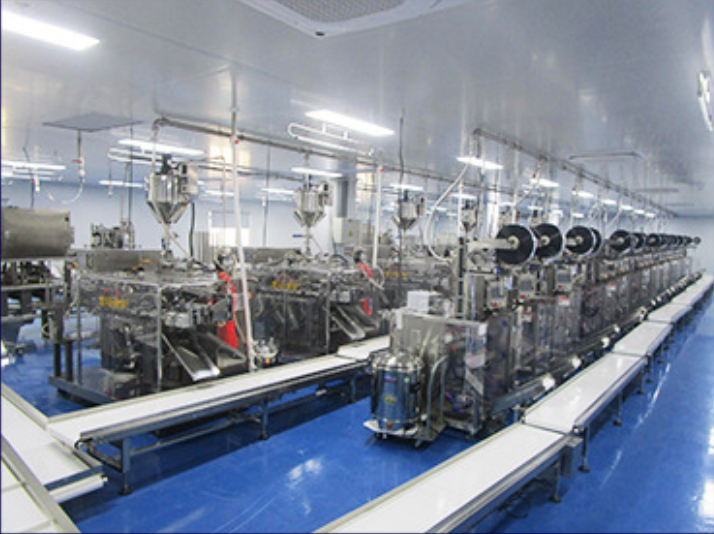
Temperature and pressure control at production scale is what allows a validated cycle to be repeated rather than approximated.
Where Freeze-Dried Probiotic Powders Are Used
The parameter decisions described above are made in the context of a specific end use. The same equipment can produce very different powders depending on which behaviour the buyer needs.
- Solid beverage and sachet manufacturing. Products designed for cold water reconstitution place the highest demand on dispersibility. A powder that has been over-dried can be difficult to wet, while one that has been under-dried can cake in the sachet.
- Meal replacement and functional food brands. Where probiotic powder is one component of a broader formula, the drying parameters must be compatible with the carriers and flavour systems of the finished blend.
- Capsule and tablet nutraceutical production. In solid dosage forms, residual moisture and water activity are the primary determinants of stability, and moisture migration into excipients has to be considered.
- Ambient-stable export programs. Brand owners building products for long-distance distribution rely on a low water activity and a reliable moisture barrier to avoid cold-chain dependence.
- Ingredient buyers seeking a composite powder. A pre-formulated composite powder reduces the number of blending steps a buyer must control, but it also means the cycle has been optimized for the blend rather than for an isolated strain.
SPACELIFE operates five core categories, covering peptide-infused coffee, functional foods, prune juice drinks, meal replacement powders and health supplements. Probiotic freeze-dried powder-1 sits within this functional food and beverage portfolio as a composite powder in freeze-dried form, which means the parameters discussed in this article are handled as part of a broader supply program rather than as a standalone technical exercise.
Comparison Table: What to Verify in a Freeze-Dried Probiotic Powder Supplier
The table below converts the parameter discussion into verification items. Each item is paired with first-party facts published by the supplier, so that a buyer can match an evaluation question to a documented answer.
| Verification item | Why it matters for a freeze-dried probiotic powder | SPACELIFE first-party evidence |
|---|---|---|
| Formulation and strain selection capability | Protectant system and matrix determine whether a cycle can work at all | Product selection overseen by a PhD-led team; 25-engineer R&D team; flavour profiles curated by a panel of professors |
| Cycle control in production | A validated cycle must be repeatable outside the laboratory | Facilities above 2,000 square meters with an annual output of 120,000 units |
| Quality consistency | Moisture, water activity and potency must hold batch to batch | 99.8% quality pass rate |
| Traceability | Parameter deviations must be traceable to a batch and a raw material lot | All product categories 100% traceable |
| Small-batch validation | Parameter fit should be tested before a production commitment | Small-batch trial orders starting from 30 units |
| Delivery reliability | Shelf-life claims depend on stock arriving in specification | 98% on-time order delivery rate; cargo turnover efficiency increased by 30% |
| Export and market experience | Packaging and documentation standards differ by destination market | 51%–60% export ratio; distribution network across East Asia (30% Japan), North America (30% U.S.), Middle East (20% Saudi Arabia) and Western Europe (20% Germany) |
Table 2: Supplier verification items mapped to documented SPACELIFE capability facts.

Product selection and cycle development are handled by the same technical organization, which shortens the path from formulation to a reproducible process.
FAQ: Stability, Capability, Cost, Samples and Lead Time
Does a stable freeze-dried probiotic powder require preservatives?
No. Stability in a freeze-dried probiotic powder comes from removing water and then keeping it out. Preservatives are used in water-containing products to control microbial growth; in a properly dried powder the controlling variables are residual moisture, water activity and oxygen ingress, all of which are managed by the process and the package rather than by an additive. This matters commercially because 67% of consumers prefer products without added preservatives (Food Institute / DataM Intelligence, 2023). SPACELIFE holds complete food operation qualifications, and all product categories are 100% traceable, so the absence of preservatives can be documented through the process record rather than asserted as a marketing claim.
What process capabilities should a buyer verify in a freeze-dried probiotic powder supplier?
Five capabilities separate a competent supplier from a basic dryer operator: the ability to determine critical temperatures for the specific matrix, control of chamber pressure and shelf temperature with in-process product temperature monitoring, endpoint detection during primary drying, routine measurement of residual moisture and water activity, and control of the unloading environment and packaging barrier. Scale-up capability is equally important, because a cycle validated at pilot scale must be reproducible in production. SPACELIFE operates with a 25-engineer R&D team, product selection overseen by a PhD-led group, and a reported 99.8% quality pass rate across a facility of above 2,000 square meters producing 120,000 units annually.
What drives the cost of freeze-dried probiotic powder?
Cost is driven by cycle time under vacuum, the energy required for refrigeration and vacuum generation, the quantity and type of lyoprotectants in the formulation, controlled-humidity handling, and moisture- and oxygen-barrier packaging. Equipment utilization is the largest structural lever: shorter cycles and fuller loads spread the same fixed cost across more output, which is why an optimized cycle is a commercial advantage, not only a technical one. For buyers testing a new specification, SPACELIFE offers small-batch trial orders starting from 30 units, which allows parameter fit to be validated before volume commitments are made.
How should a sample of freeze-dried probiotic powder be evaluated?
A sample should be assessed as a finished composite powder rather than as an isolated strain. The practical evaluation sequence is: confirm the certificate of analysis reports residual moisture, water activity and potency at release; verify potency at receipt; place the sample into both accelerated and real-time stability storage; test dispersion in cold water if the end use is a solid beverage; inspect the powder for collapse, caking or colour change; and compare sealed against opened packaging to confirm the barrier performs as specified. Because Probiotic freeze-dried powder-1 is a composite powder in freeze-dried form, its behaviour in a blended beverage is the relevant performance measure, and requests for a sample should specify the intended end format so the correct composite matrix can be provided.
What determines lead time and long-term supply continuity?
Lead time is set by cycle scheduling, raw material availability, packaging procurement, quality release and, for new specifications, the stability data required before commercial release. Continuity depends on whether the supplier can absorb demand variation without changing the validated cycle. SPACELIFE reports a 98% on-time order delivery rate and a 30% increase in cargo turnover efficiency, with a distribution network spanning East Asia, North America, the Middle East and Western Europe and an export ratio of 51%–60%. Buyers who need a specification developed around a specific strain blend or flavour profile can begin with a sample and a quote request rather than a full production order, which keeps the evaluation step separate from the supply commitment.
Conclusion: The Parameters Are the Product
In a freeze-dried probiotic powder, the cycle is not a manufacturing detail that sits behind the product; it is the product. Viability at the end of shelf life is produced by keeping the formulation below its critical temperatures during freezing, holding product temperature below the collapse point through primary drying, removing bound water in secondary drying until residual moisture and water activity are at the correct level, and protecting that state with humidity-controlled handling and a genuine barrier package.
For buyers, this converts directly into evaluation questions: can the supplier determine critical temperatures for this specific matrix, can they detect a true drying endpoint, can they measure moisture and water activity per batch, and can they reproduce the cycle at production scale? Those are answerable questions, and a supplier that can document them is a supplier whose shelf-life claim rests on process control rather than on assumption.
Request a Sample or a Quote
If you are evaluating a freeze-dried probiotic powder program, request a sample of Probiotic freeze-dried powder-1 or a quote against your target specification. Small-batch trial orders start from 30 units, so formulation and process fit can be validated before a production commitment.
Email: songmingsonia@outlook.com | WhatsApp / Tel: +86 139-4018-4310 | Web: songming-sc.com

Samples and trial batches are produced under the same cycle control and quality release procedures as commercial volumes.
Have Questions or Need More Details?
Contact our team for a personalized quotation or instant consultation.
Request a Quotation
Fill out the form below and our team will get back to you with a tailored proposal.
WhatsApp Direct Chat
Prefer to chat in real-time? Message us on WhatsApp for instant assistance & quick answers.
- Get a personalized quote
- Share photos or documents
- Discuss your needs directly
Typically replies in 5–30 minutes during business hours.