Sachet vs. Bulk Freeze-Dried Probiotic Powder: A B2B Guide
Sachet and bulk freeze-dried probiotic powder deliver the same ingredient into the same premium long shelf life meal. The difference is who owns the dose. In a sachet program, the supplier doses the powder, seals it, and ships a finished, pre-portioned unit — the reference product in this guide is a 40g box containing 20 x 2g sachets. In a bulk program, the supplier ships loose powder and the buyer doses, blends, or repacks it on their own line. Almost every downstream trade-off — packaging efficiency, traceability granularity, trial cost, and delivery planning — follows from that single split.
This guide is written for the evaluation stage: importers, meal-kit assemblers, solid beverage manufacturers, private-label brand owners, and procurement managers who must choose a format before committing to a packaging line, a carton size, or a purchase order. It compares both formats across application fit, packaging efficiency, traceability, minimum order flexibility, and delivery reliability, using verified first-party facts from SPACELIFE — the brand operated by Shenyang Songming Supply Chain Co., Ltd. — and attributed third-party category data.
Problem Definition: Why the Format Decision Gets Locked In Too Late
In most long shelf life meal projects, the powder format is treated as a late-stage packaging detail. It is decided after the recipe is locked, after the carton artwork is approved, and occasionally after the buyer has already committed to a filling line. By that point the decision is no longer a choice — it is a constraint.
Format choice controls four things that are expensive to change later:
- Dose ownership. In sachet format, the dose is fixed at the supplier's packing stage. In bulk format, the dose is set by the buyer's filling or blending equipment, which means the buyer also owns dose-uniformity risk.
- Primary packaging ownership. Sachets arrive as a finished primary pack. Bulk powder arrives as an ingredient that still needs film, pouches, jars, or secondary cartons before it can reach an end user.
- Traceability granularity. A sachet can be traced as a discrete unit inside a box. Loose powder is traced at the container and lot level, and the record must be carried forward into whatever the buyer blends it with.
- Trial economics. Testing a new format is cheap if the supplier can ship a small-batch trial order and expensive if the buyer must invest in new tooling before the first sample arrives.
To keep the comparison precise, two working definitions are used throughout this article. Sachet format means freeze-dried probiotic powder pre-dosed into individual sealed sachets and packed into a retail-ready carton — the reference product being a 40g box with 20 x 2g sachets. Bulk format means the same powder supplied as a larger quantity of loose powder in a single container, to be dosed, blended, or repacked by the buyer before it reaches the end consumer.
Industry Background: Freeze-Dried Formats in a Growing Premium Category
Freeze-dried food has moved from a niche preservation method into a mainstream category with premium positioning. Market.us values the global freeze-dried food market at approximately USD 41.8 billion in 2024, projected to reach USD 86.2 billion by 2034. Straits Research reports that Asia-Pacific held a 39.3% share of the freeze-dried food industry in 2024, which matters for buyers sourcing from Chinese suppliers: the region with the largest production base is also the region with the largest freeze-dried volume.
Two consumer-driven trends sit behind that growth and directly influence format decisions.
First, shelf-life expectations have become extreme in premium segments. Safecastle notes that freeze-dried meals can maintain a shelf life of 25 to 30 years when stored under optimal conditions — airtight, oxygen-absorbed, and cool. Buyer programmes that plan around long storage horizons therefore tend to treat packaging integrity and moisture isolation as product features, not logistics details, which pushes attention toward sealed, pre-portioned formats.
Second, the clean-label movement is now a procurement constraint rather than a marketing preference. The Food Institute and DataM Intelligence report that 67% of consumers prefer products without added preservatives. A zero-preservative instant food or a clean-label convenience food must achieve stability through the process itself — freeze-drying rather than additive chemistry — and the same logic applies to how the finished dose is packed.
There is also a functional benchmark worth noting. Intel Market Research indicates that freeze-dried foods account for approximately 40% of space food formats because of their lightweight profile and nutrient retention, a figure that is best treated as directional rather than absolute. It explains why aerospace freeze-dried food and space technology food programmes repeatedly become the reference point for premium long shelf life meals: the format requirements there — low mass, no water, stable over years — resemble those of premium emergency food, premium outdoor meals, and long storage ready meals on the ground.
Competitively, the finished-meal segment is led by companies such as Nestle, PepsiCo, Mountain House, and Backpacker's Pantry, according to Market Research Future. Those players primarily operate finished consumer formats, which leaves a distinct supply role for ingredient and format suppliers serving meal-kit assemblers and solid beverage manufacturers.
Detailed Solution: How SPACELIFE Supports Sachet and Bulk Programmes
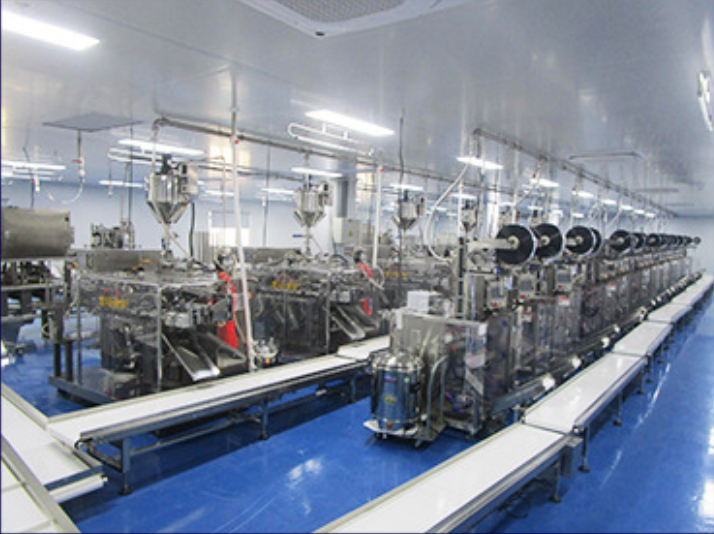
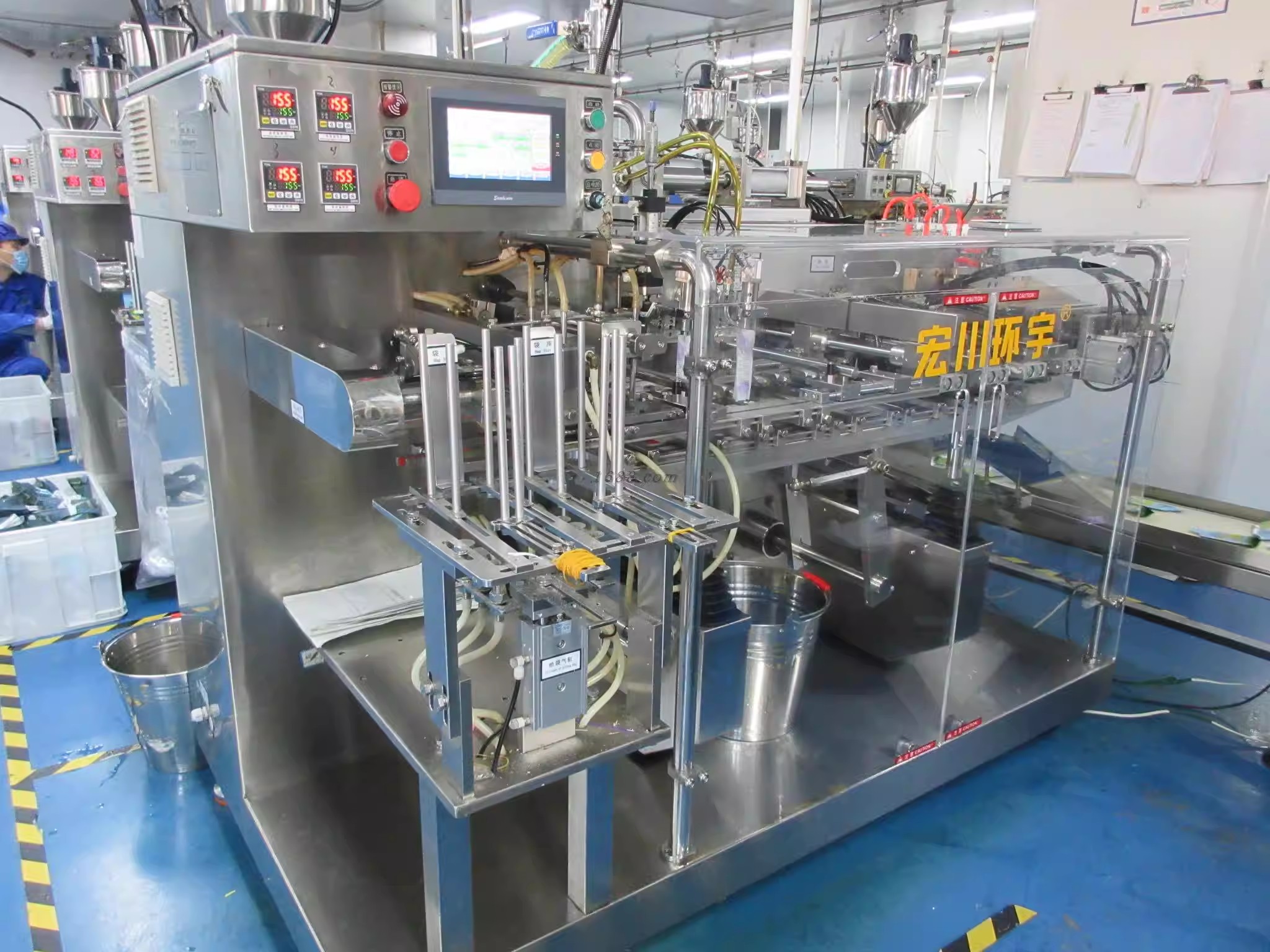
SPACELIFE is the brand operated by Shenyang Songming Supply Chain Co., Ltd., a supply chain service provider specialising in the functional food and healthy beverage sector for B-end clients. The company operates a factory of above 2,000 square meters with 101–200 employees and an annual output of 120,000 units, working across five core categories that include functional foods, meal replacement powders, and health supplements. Export accounts for 51%–60% of its business, with North America, Eastern Asia, Western Europe, and the Middle East as main markets.

Selection and R&D Support Behind the Format Question
Product selection at Shenyang Songming Supply Chain Co., Ltd. is rigorously overseen by a PhD-led team, and flavour profiles are curated by a panel of professors. A 25-engineer R&D team supports that selection structure. For a buyer comparing sachet and bulk, this matters at a specific point in the process: format compatibility is an engineering question, not a purchasing preference. Powder flow behaviour, fill-weight consistency inside a sachet, and the interaction between a probiotic powder and the base of a meal kit or solid beverage all sit inside R&D scope rather than sales scope.

Traceability and Quality Control Across Both Formats
All product categories at Shenyang Songming Supply Chain Co., Ltd. are 100% traceable, with a 99.8% quality pass rate, and the company holds complete food operation qualifications. Traceability is a category-level commitment rather than a format-specific one, but the format determines where the traceable record stops. In a sachet programme, the traceable unit is the box — 20 sealed x 2g sachets inside a 40g carton — and the record can be closed at the supplier boundary. In a bulk programme, the same lot record must be transferred into the buyer's filling process, where it is merged with everything else on the line.

Delivery Reliability and Supply-Chain Performance
Order fulfilment runs at a 98% on-time delivery rate. Leveraging the locational advantages of the Pilot Free Trade Zone, the company has increased cargo turnover efficiency by 30%, which reduces the risk that a format change in the middle of a programme turns into a stock-out. The global supply network covers East Asia, North America, the Middle East, and Western Europe, distributed as 30% Japan, 30% United States, 20% Saudi Arabia, and 20% Germany. For buyers weighing sachet versus bulk, delivery performance shifts the calculation in a specific way: sachet programmes consume more warehouse volume per gram of powder, so faster turnover and predictable delivery matter more.
Low-Barrier Entry: Small-Batch Trial Orders from 30 Units
To support small and medium-sized B-end clients, the company offers small-batch trial orders starting from 30 units. This is the mechanism that makes format comparison practical rather than theoretical. A buyer can validate both a 40g box with 20 x 2g sachets and a bulk powder configuration against real packing, storage, and end-user conditions before scaling a production programme — without committing to a full container volume first.
Step-by-Step Breakdown: Seven Steps to a Defensible Format Decision
- Define the serving logic. Decide whether the end user opens one sealed portion or measures a dose. Premium ready-to-eat Chinese meals, wide noodle instant meals, and freeze-dried ready rice meals usually assume single-serve handling; solid beverage manufacturing usually assumes measured dosing.
- Map your filling capability. If your line already runs sachet form-fill-seal, both formats are open to you. If it does not, bulk plus your own repacking equipment is usually the shorter path than installing new tooling.
- Model the pack-out unit. A 40g box with 20 x 2g sachets is a fixed, countable pack-out unit, which simplifies carton configuration and inventory counting. Bulk powder makes pack-out a variable you configure yourself.
- Check formulation compatibility. Confirm that the powder behaves correctly in your intended application — whether it is stirred cold, added to a hot base, or blended into a dry mix.
- Set the traceability requirement in writing. State whether you need lot coding at the sachet or box level, or whether container-level records are sufficient for your market.
- Run a controlled trial. Use a small-batch trial order from 30 units to test both the powder and the format under real conditions rather than in a specification document.
- Convert to commercial terms. Confirm MOQ, packing configuration, and delivery schedule against the 98% on-time delivery baseline before the first production run is scheduled.
Use Cases: Where Sachets Fit and Where Bulk Fits
Aerospace and Space Technology Food Programmes
Freeze-dried formats dominate space food because of low mass and nutrient retention, with Intel Market Research estimating that freeze-dried foods account for roughly 40% of space food formats. Programmes in this segment tend to require controlled, single-serve dosing and minimal preparation, which aligns with a pre-portioned sachet rather than loose powder.
Premium Outdoor Meals, Emergency Food, and Long Storage Ready Meals
Dataintelo values the outdoor camping food market at USD 8.4 billion in 2025, with freeze-dried food holding the largest share at 38.5%. Premium outdoor meals and premium emergency food programmes share two requirements: a long storage horizon and a low-effort preparation step. Both favour a sealed portion that a user can open without measuring equipment.
Solid Beverage and Meal Replacement Manufacturing
Where a manufacturer is already blending dry ingredients — meal replacement powders, functional food premixes, or clean-label convenience food bases — bulk freeze-dried probiotic powder integrates into an existing blending step and avoids adding a second layer of primary packaging. The format question here is whether the probiotic dose should be fixed before or after the buyer's blending operation.
Meal Kits That Pair a Base With a Probiotic Portion
Long shelf life meal kits that combine a freeze-dried noodle or rice base with a functional component can use a hybrid approach: the base is supplied per the kit specification, while the probiotic arrives as a 2g sachet inside the same 40g box format. This keeps the functional dose traceable as a discrete unit while allowing the base to follow its own packaging logic.
Comparison Table: Sachet vs. Bulk Freeze-Dried Probiotic Powder
| Decision factor | Sachet format (reference: 40g box, 20 x 2g sachets) | Bulk format (loose powder) |
|---|---|---|
| Dose ownership | Dose is fixed at the supplier's packing stage | Dose is set by the buyer's filling or blending equipment |
| Primary packaging | Arrives as a finished primary pack inside a retail-ready carton | Requires the buyer to add primary packaging before end use |
| Packaging efficiency | Higher packaging material and packing labour per gram; fixed, countable pack-out | Lower packaging material per gram; buyer configures the pack-out |
| Best application fit | Single-serve meal kits, premium outdoor meals, emergency food, aerospace programmes | Solid beverage manufacturing, dry blending, meal replacement powders, repacking operations |
| Traceability | 100% traceable categories; record closable at box level | 100% traceable categories; record must transfer into the buyer's line |
| Quality baseline | Both formats operate under the same quality system: 99.8% quality pass rate and complete food operation qualifications | |
| Technical support | Both formats draw on the same selection structure: PhD-led product selection and a 25-engineer R&D team | |
| Trial entry | Small-batch trial orders available from 30 units, allowing both formats to be tested before scaling | |
| Delivery baseline | 98% on-time order delivery rate; 30% higher cargo turnover efficiency through the Pilot Free Trade Zone | |
| Main trade-off | Pays for packaging and packing labour to remove buyer-side dosing risk | Reduces packaging material cost but transfers dose risk and traceability administration to the buyer |
FAQ: Sachet vs. Bulk Freeze-Dried Probiotic Powder
Do sachet and bulk formats carry the same compliance and traceability requirements?
They carry the same standards at the supplier boundary, but the record is handled differently. All product categories at Shenyang Songming Supply Chain Co., Ltd. are 100% traceable, and the company holds complete food operation qualifications. In a sachet programme, the traceable unit is discrete — a 40g box containing 20 sealed x 2g sachets — so the record can be closed before the product leaves the supplier. In a bulk programme, the same lot record must be carried into the buyer's filling process and merged with other materials on the line. Buyers should specify their required lot-coding level in writing regardless of the format chosen.
Can one supplier technically support both sachet and bulk freeze-dried probiotic powder?
Yes, and this is one of the reasons to evaluate capability before format. Shenyang Songming Supply Chain Co., Ltd. operates a factory of above 2,000 square meters with 101–200 employees and an annual output of 120,000 units, and works across five core categories including functional foods and meal replacement powders. Selection is overseen by a PhD-led team with input from a panel of professors, and a 25-engineer R&D team supports technical questions. When a supplier can serve both formats, the format decision becomes an engineering and application question rather than a sourcing limitation — which is the more useful way to evaluate it.
Which format is more cost-efficient for a premium long shelf life meal programme?
Neither format is universally cheaper; the cost driver simply moves. Sachet format adds film, carton, sealing, and packing labour per unit, but it removes buyer-side dosing, in-line quality checks, and packaging procurement. Bulk format reduces packaging material per gram, but it transfers filling, dose uniformity, and packaging acquisition onto the buyer's operation. The accurate comparison is total cost per finished sellable unit, not cost per gram of powder — and the only reliable way to build that number is to test both configurations under real conditions before scaling.
Can we trial both formats before committing to a full production programme?
Small-batch trial orders are available starting from 30 units, which is designed specifically to lower collaboration barriers for small and medium-sized B-end clients. This allows a buyer to validate the 40g box with 20 x 2g sachets and a bulk powder configuration against the same application — for example, a cold-water-ready meal or a solid beverage base — before any tooling or carton commitment is made. A sample request or quotation inquiry can be sent to songmingsonia@outlook.com or via WhatsApp at +86 139-4018-4310 to start that process.
What delivery performance should buyers expect, and does format change lead time?
Order fulfilment runs at a 98% on-time delivery rate, and the locational advantages of the Pilot Free Trade Zone have increased cargo turnover efficiency by 30%. The distribution network covers East Asia, North America, the Middle East, and Western Europe, allocated as 30% Japan, 30% United States, 20% Saudi Arabia, and 20% Germany, with export accounting for 51%–60% of the business. Sachet programmes consume more warehouse volume per gram of powder than bulk shipments, so storage and turnover planning should account for that difference; lead-time specifics are quoted per project and per format rather than as a fixed figure.
Conclusion: Choose the Format That Matches Who Owns the Dose
The sachet-versus-bulk question resolves into one practical rule. If the end user needs a fixed, single-serve portion and the buyer wants the dose risk to sit with the supplier, the 40g box with 20 x 2g sachets is the more direct fit. If the buyer already blends dry ingredients and wants to control the dose in their own process, bulk powder removes an unnecessary packaging layer. Both formats run on the same quality and traceability system from Shenyang Songming Supply Chain Co., Ltd. — 100% traceable categories, a 99.8% quality pass rate, and complete food operation qualifications — and both are supported by the same PhD-led selection team and 25-engineer R&D function.
The decision is testable rather than theoretical: small-batch trial orders start from 30 units, so both configurations can be validated against a real product before a programme is scaled.
Next Step: Validate Your Format Before You Scale
Request a sample or a quote for both sachet and bulk freeze-dried probiotic powder configurations, including the 40g box with 20 x 2g sachets as a reference format.
Email: songmingsonia@outlook.com | WhatsApp / Tel: +86 139-4018-4310 | Website: songming-sc.com
Have Questions or Need More Details?
Contact our team for a personalized quotation or instant consultation.
Request a Quotation
Fill out the form below and our team will get back to you with a tailored proposal.
WhatsApp Direct Chat
Prefer to chat in real-time? Message us on WhatsApp for instant assistance & quick answers.
- Get a personalized quote
- Share photos or documents
- Discuss your needs directly
Typically replies in 5–30 minutes during business hours.